







CRUISE SHIP CAREER PATHS
Explore the main cruise ship departments, compare promotion routes, and quickly jump into the onboard career path that fits your skills, interests, and long-term goals at sea.
Choosing a realistic starting point for a cruise ship career
The strongest place to start is usually the department that connects most clearly with experience you can already prove. Cruise lines recruit for specific operational jobs, so your application is easier to understand when your previous work, training, certificates, and responsibilities relate directly to the role you want onboard.
That does not mean you need previous cruise ship experience for every job. Land-based experience can be highly relevant. Restaurant service, hotel reception, childcare, retail, photography, fitness, beauty therapy, security, electrical work, plumbing, nursing, IT support, and many other shore-based careers can translate into shipboard departments when the core skills match.
Before choosing a route, think beyond the job title. Consider how much guest interaction you want, whether the role is sales-focused or technical, how physical the work may be, whether licences or certificates are required, and whether you prefer operational work behind the scenes or a highly visible guest-facing position.
GUEST-FACING & HOSPITALITY CAREER PATHS
These departments are ideal for crew who enjoy guest interaction, service standards, teamwork, sales, presentation, and creating memorable onboard experiences.
Casino Career Path
Explore growth from casino entry roles into dealer, supervisor, and management positions onboard.
View Career PathCulinary Career Path
See how chefs progress from junior galley roles to senior kitchen leadership at sea.
View Career PathFood & Beverage Career Path
Follow promotion routes in restaurants, bars, dining rooms, and guest-facing service teams.
View Career PathFront Desk Career Path
Understand how reception roles can grow into stronger administrative and guest service leadership positions.
View Career PathGuest Services Career Path
Learn the route from guest support roles to handling higher-level service operations onboard.
View Career PathHousekeeping Career Path
View the progression from utility and cabin roles through supervisory and executive housekeeping levels.
View Career PathRetail / Shops Career Path
Explore the path from boutique associate to retail manager within cruise ship shopping operations.
View Career PathSpa & Wellness Career Path
See how therapists and wellness professionals can move into leadership within onboard spa operations.
View Career PathEntertainment Career Path
Discover performance, activity, and entertainment support routes across cruise ship productions.
View Career PathYouth / Kids Club Career Path
Learn about progression within youth activities, childcare support, and family guest programming.
View Career PathPhotography Career Path
Explore how onboard photographers grow through guest photo operations, sales, and team leadership.
View Career PathWhat makes a candidate credible for a cruise ship role
A good application should make the connection between your background and the onboard job obvious. Instead of simply saying that you want to work on a cruise ship, show the work you have already done, the environments you have worked in, the level of responsibility you have held, and the skills that can transfer to the department you are targeting.
For guest-facing departments, employers may look closely at service standards, communication, confidence, sales ability, teamwork, and experience dealing with the public. For technical, medical, marine, security, or specialist positions, formal qualifications, licences, documented experience, safety knowledge, and role-specific competence can matter much more.
It is also worth being realistic about entry level. Some departments have junior roles that allow people to build experience onboard, while others are designed for candidates who already have a defined profession or technical background. Applying for a role that genuinely matches your current level is usually more useful than chasing a senior title before you have the required experience.
TECHNICAL, MAINTENANCE & SAFETY CAREER PATHS
These departments are ideal for crew with technical skills, operational discipline, marine knowledge, engineering experience, or strong safety awareness onboard.
Deck Department Career Path
Follow the route from cadet and junior officer roles into senior deck leadership at sea.
View Career PathEngine Technical Career Path
Understand how marine engine and technical crew progress through engineering ranks onboard.
View Career PathIT Career Path
Explore onboard information technology roles supporting networks, systems, and digital operations.
View Career PathLaundry Department Career Path
See how laundry and linen operations can grow into supervisory and departmental responsibility.
View Career PathMedical Department Career Path
Review clinical and healthcare pathways onboard for qualified medical professionals at sea.
View Career PathPlumbing & Hotel Maintenance Career Path
Explore technical hotel maintenance progression supporting guest areas, cabins, and ship systems.
View Career PathSecurity Department Career Path
Learn how security crew develop through patrol, response, compliance, and supervisory roles onboard.
View Career Path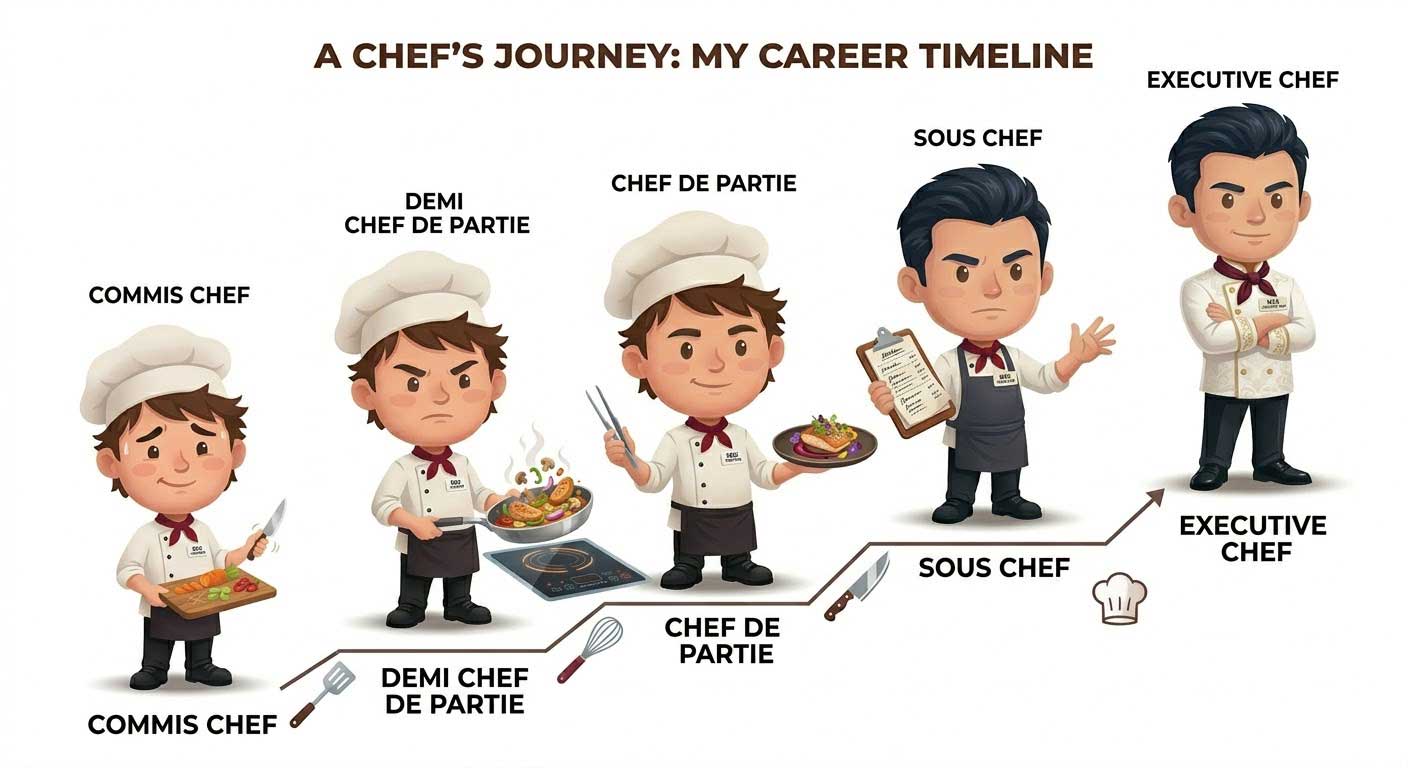
HOW CRUISE SHIP CAREER GROWTH USUALLY WORKS
Promotion at sea often depends on more than just time onboard. Strong performance, contract history, leadership ability, training, reliability, and department demand all matter.
Performance Matters
Crew who consistently deliver strong service, follow procedures, and support their team are more likely to be considered for promotion.
Experience Builds Trust
Returning for more contracts and proving yourself in a department often opens the door to more responsibility and better roles.
Leadership Gets Noticed
Many promotions happen when crew show initiative, professionalism, and the ability to guide others under pressure.
Training Helps You Advance
Department-specific knowledge, certifications, product understanding, and onboard systems training can all improve promotion potential.
Building a career at sea across several contracts
A cruise ship career is often built one contract at a time. Your first contract gives you a chance to understand shipboard routines, company standards, department procedures, and the pace of living and working at sea. Later opportunities are shaped by the record you build through reliability, performance, teamwork, and the responsibilities you are trusted to handle.
Promotion is not automatic simply because you complete a certain number of contracts. Vacancies, business needs, performance reviews, training, qualifications, leadership ability, and the structure of your department can all affect when a higher position becomes available. Two people starting at the same level can therefore progress at very different speeds.
Changing departments can happen, but it should be treated as a possibility rather than a guaranteed career strategy. A different department may require new qualifications, stronger technical knowledge, fresh interviews, additional training, or an available vacancy. In many cases, it is easier to build credibility in the department where you already have useful experience and then explore internal opportunities after you have proven yourself onboard.
Use time between contracts productively. Updating certificates, improving language or technical skills, documenting new responsibilities, asking for references where appropriate, and keeping your CV current can make the next application or promotion conversation much stronger. Long-term progression is usually easier when each contract adds something measurable to your experience rather than simply repeating the same duties.
CRUISE SHIP CAREER PATH FAQ
What is the best cruise ship career path for beginners?
It depends on your skills and experience. Many beginners start in hospitality, housekeeping, food service, youth programs, retail, or guest-facing support roles.
Which cruise ship departments promote the fastest?
Promotion speed depends on company needs, your performance, previous contracts, and department demand. Technical and service departments can both offer strong growth when crew perform well.
Can you move into higher roles onboard over time?
Yes. Many cruise ship departments have clear internal promotion routes, especially for crew who return for more contracts and build a strong track record.
Do all cruise ship departments follow the same promotion structure?
No. Each department has its own hierarchy, required skills, and leadership structure, which is why comparing career paths is useful before applying.
READY TO EXPLORE YOUR DEPARTMENT?
Use this hub to compare cruise ship career paths and jump straight into the department that matches your experience, goals, and onboard interests.