Explore the Youth Staff Timeline at Sea
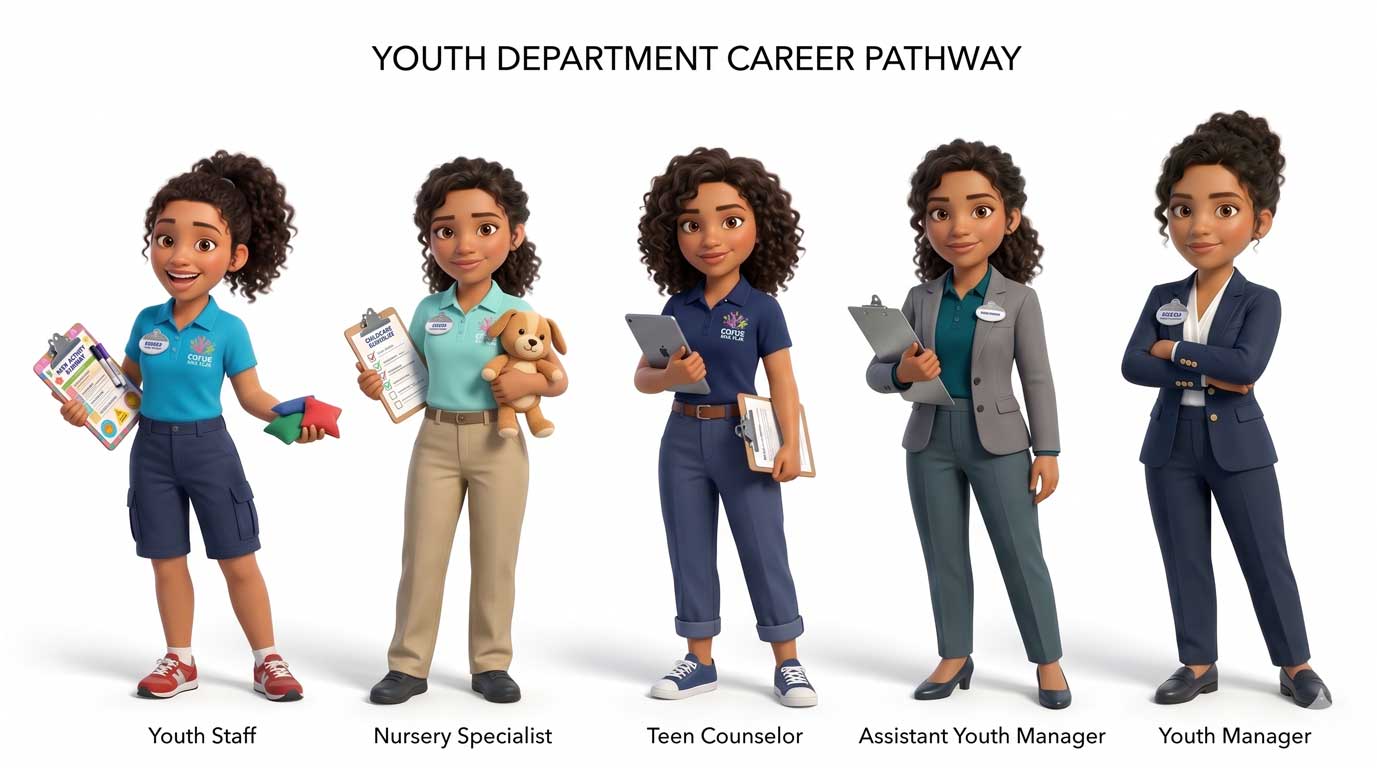
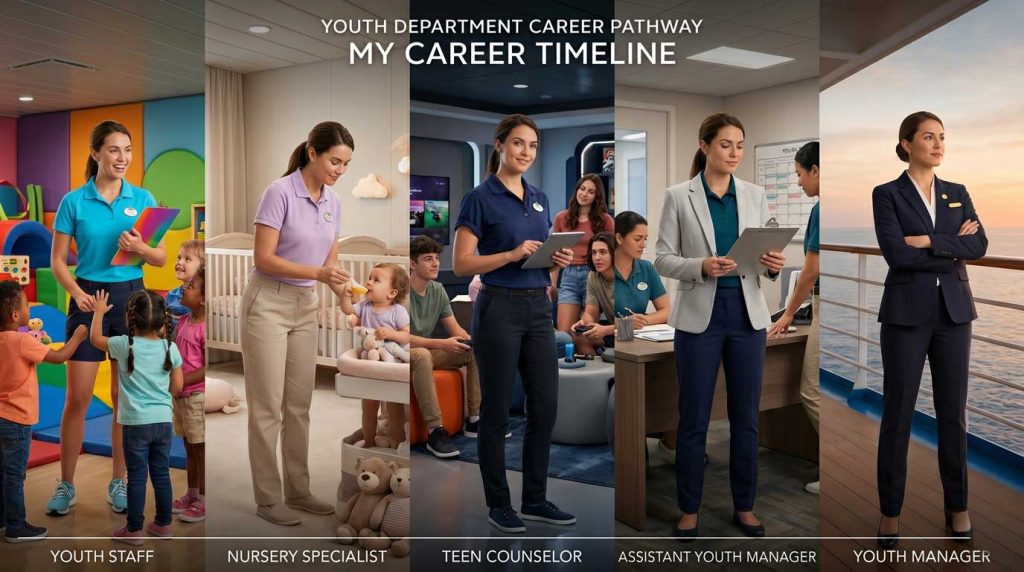
Drag the progress line or tap a stage to move through the youth services journey, from entry level activity hosting to managing the entire youth department onboard.

Youth Staff
This is where the journey begins. You facilitate high-energy activities, ensure child safety, and create unforgettable vacation memories for kids and teens.
Salary Growth in Youth Services
Monthly salary ranges shown as a guide. Professional youth staff on cruise ships often receive higher base pay than general crew due to specialized education requirements.
Why Youth Staff Salaries Are Powerful
Onboard income for youth counselors offers unique value because your professional earnings are protected from the high overheads of shore-side living.
Your Youth Service Growth Potential
From entry-level youth staff roles to senior department leadership, the earning journey in family services scales significantly with experience and rank.
How Fast Can You Grow in Youth Services?
Career progression depends on your performance, consistency, leadership, and the opportunities available onboard.
What helps you move up faster?
At this stage, promotion often comes from high-energy engagement, reliability, adherence to sign-in protocols, and showing you can lead groups independently.
What changes at this level?
You are expected to become stronger in age-group management, administrative reporting, parent conflict resolution, and maintaining brand standards across the club.
What unlocks the next jump?
Moving toward Assistant Manager usually requires visible leadership, stronger communication, staff control, and the ability to handle USPH or safety audits confidently.
What matters most at senior level?
Senior promotions depend on operational control, leadership, accountability, safety awareness, and the ability to maintain high guest satisfaction at scale.
Crew who demonstrate the following can often progress faster than the standard timeline:
- Strong Discipline: Absolute adherence to maritime safety and USPH standards.
- High Engagement Energy: Consistently creating "wow" moments for kids and teens.
- Leadership Attitude: Proactively solving problems and supporting the wider team.
Growth ultimately depends on consistent performance, fleet vacancies, and how professionally you deliver results under pressure.

What Unlocks Youth Staff Promotion?
Moving up in the youth department is about proving you can balance high-energy engagement with rigorous safety and administrative responsibility.
Why safety matters
In maritime youth services, safety is the first priority. Consistency means following strict sign-in/out procedures every time, mastering emergency drills, and ensuring every child in your care is accounted for without exception.
Why engagement matters
Promotion follows those who bring "the magic." Youth staff who can lead high-energy activities, create inclusive environments for all children, and receive consistently high positive feedback scores from parents are prioritized for growth.
Why resolution matters
Future youth managers must be able to navigate difficult situations. Being able to calmly explain policies to parents, resolve peer conflicts among children, and support the team during busy periods shows leadership readiness.
Why accuracy matters
A strong professional attitude includes the "boring" parts. Managing activity schedules, tracking department inventory, and completing technical logs accurately proves you are ready for the administrative weight of a management role.
Crew members who show exceptional leadership potential, a deep understanding of USPH/Safety laws, and a consistent professional attitude can often progress to management roles faster than shore-side counterparts.

Common Mistakes That Slow Youth Promotion
Growth onboard is not only about having high energy. Many youth staff stay in entry roles longer because of small habits that reduce management trust and operational safety.
The youth staff who grow fastest are the ones who remove these mistakes early, stay safety-focused, and build trust through operational discipline and high-energy guest interaction onboard.
How to Stand Out Faster
The chefs who move up fastest are usually not just talented. They are dependable, coachable, disciplined, and trusted when pressure rises.
Why this stands out
Owning your station shows maturity and discipline. It means your section is clean, stocked, organised, and under control, even before someone asks. That kind of ownership builds trust quickly in a professional galley.
Why this stands out
Pressure reveals professionalism. When service becomes intense, chefs who stay calm, communicate clearly, and keep quality stable are often seen as stronger candidates for future growth and leadership.
Why this stands out
Chefs who ask for feedback show coachability. They usually improve faster, correct mistakes earlier, and make it easier for senior chefs to invest time in them because they clearly want to grow.
Why this stands out
Reliability is one of the strongest promotion signals onboard. Being punctual, prepared, steady, and dependable every shift shows that others can count on you when standards and timing matter most.
When senior chefs know they can rely on you, your growth can accelerate. In many cruise ship kitchens, trust is built through standards, attitude, consistency, and the way you perform when pressure rises.
A Day in the Life of a Youth Staff Member
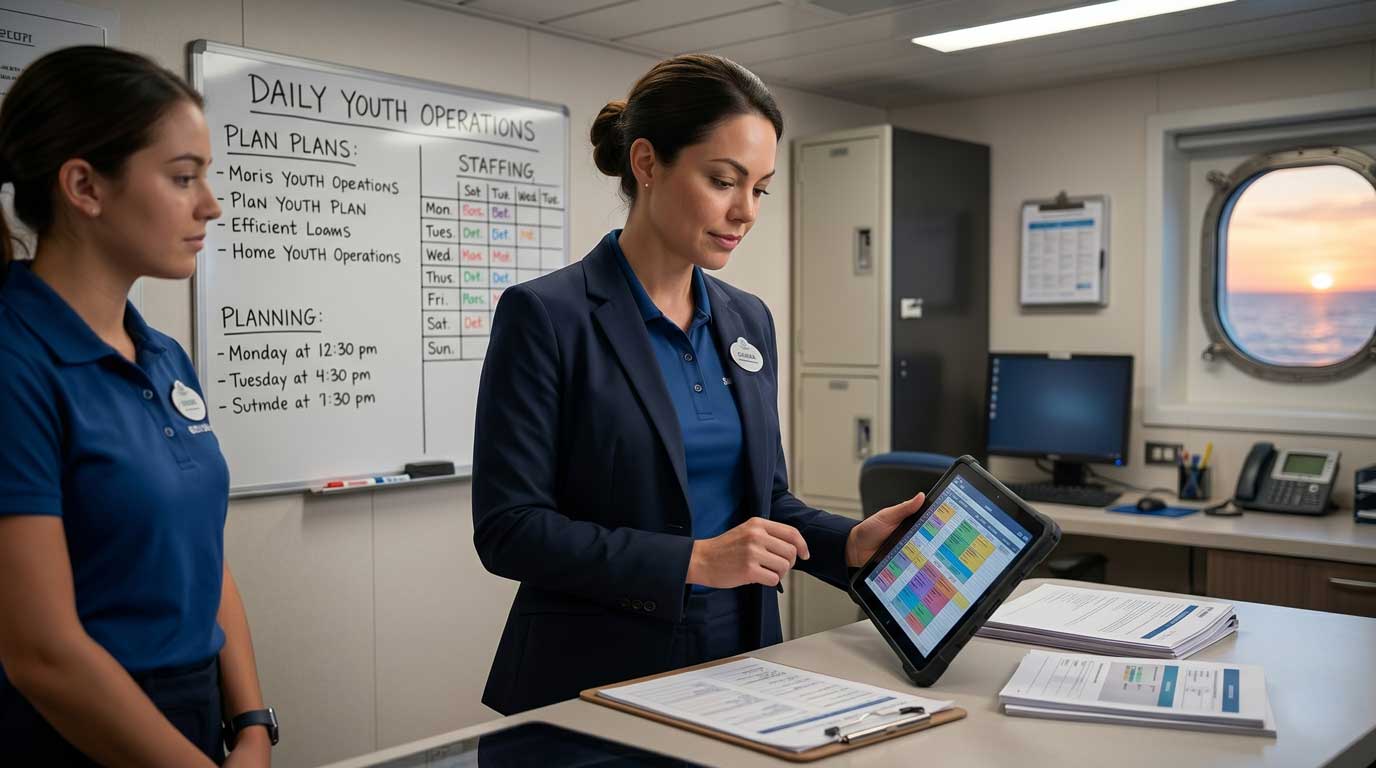
Explore how a typical day onboard flows, from morning club setup to late-night teen socials. Tap each stage to see what youth counselors are usually doing throughout the day at sea.
The youth center prepares for arrival.
Before the first child arrives, youth staff are busy sanitizing venues, checking safety logs, setting up activity stations, and reviewing the daily programming schedule to ensure everything is ready for play.




Ready to Start Your Cruise Ship Youth Staff Journey?
If you are serious about building a professional childcare career at sea, the next move is to take action. Explore open youth department roles, apply for positions, or strengthen your profile before submitting your application.
The youth staff who move forward fastest are usually the ones who prepare properly, present their engagement skills professionally, and apply with a clear understanding of maritime safety standards.
Frequently Asked Questions About Cruise Ship Youth Careers
These are the most common questions professionals ask when considering a maritime childcare career and family entertainment roles at sea.
What qualifications do I need for Youth Staff roles?
Do youth staff have their own cabins or share?
What is the most important factor for promotion?
Is work restricted only to the Youth Club venues?
Useful Pages for Future Youth Staff
If you want to move from interest to action, these pages will help you understand the maritime requirements, improve your application, and prepare properly for work onboard.