Explore the Navigation Timeline at Sea
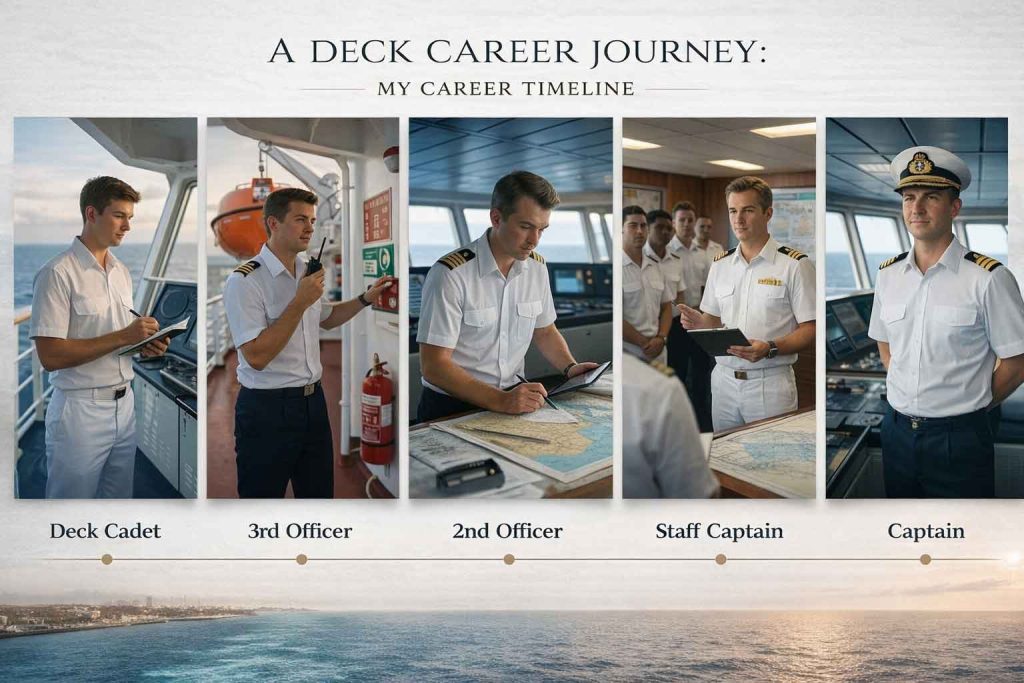
Drag the progress line or tap a stage to move through the deck journey, from entry-level navigation training to the absolute command of the Master.

Deck Cadet
This is where the navigation journey begins. You focus on bridge watchkeeping, learning chart corrections, vessel maintenance, and completing your Training Record Book.
Salary Growth Across the Deck Path
Monthly salary ranges shown as a guide. Actual navigation pay varies by company, vessel gross tonnage, licensing grade, and sea service duration.

Why Navigation Salaries Are Powerful
Onboard income for deck officers and crew goes much further because your core monthly living costs are almost entirely eliminated.
Your Growth Potential
From entry-level Deck Cadets to the ultimate command of a Master Mariner, the earning journey in navigation scales with your licensing and expertise.
How Fast Can You Grow?
Career progression for Deck Officers depends on accumulating sea time, passing rigorous licensing exams, and demonstrating absolute command capability.
What helps you move up faster?
At this stage, promotion comes from proving your reliability during night watches, mastering COLREGs, and showing technical proficiency with ECDIS and radar systems while completing your sea time requirements.
What changes at this level?
You transition from a support role to being the ship's primary navigator. You are expected to handle complex passage planning, manage port arrivals/departures, and maintain all navigational charts with zero errors.
What unlocks the next jump?
Moving to Staff Captain requires a Chief Officer’s certificate and proven leadership. You must manage large maintenance projects, handle crew disciplinary matters, and ensure the vessel meets all SOLAS and MARPOL standards.
What matters most at senior level?
Mastery of ship handling, crisis management, diplomacy with port authorities, and the ability to maintain the highest safety standards while ensuring a premium guest experience are the markers of a true Captain.
The most successful Deck Officers are those who study for their next license while still at sea. Proactive learning, a clean safety record, and demonstrating "command presence" early on will significantly accelerate your path to the center chair.
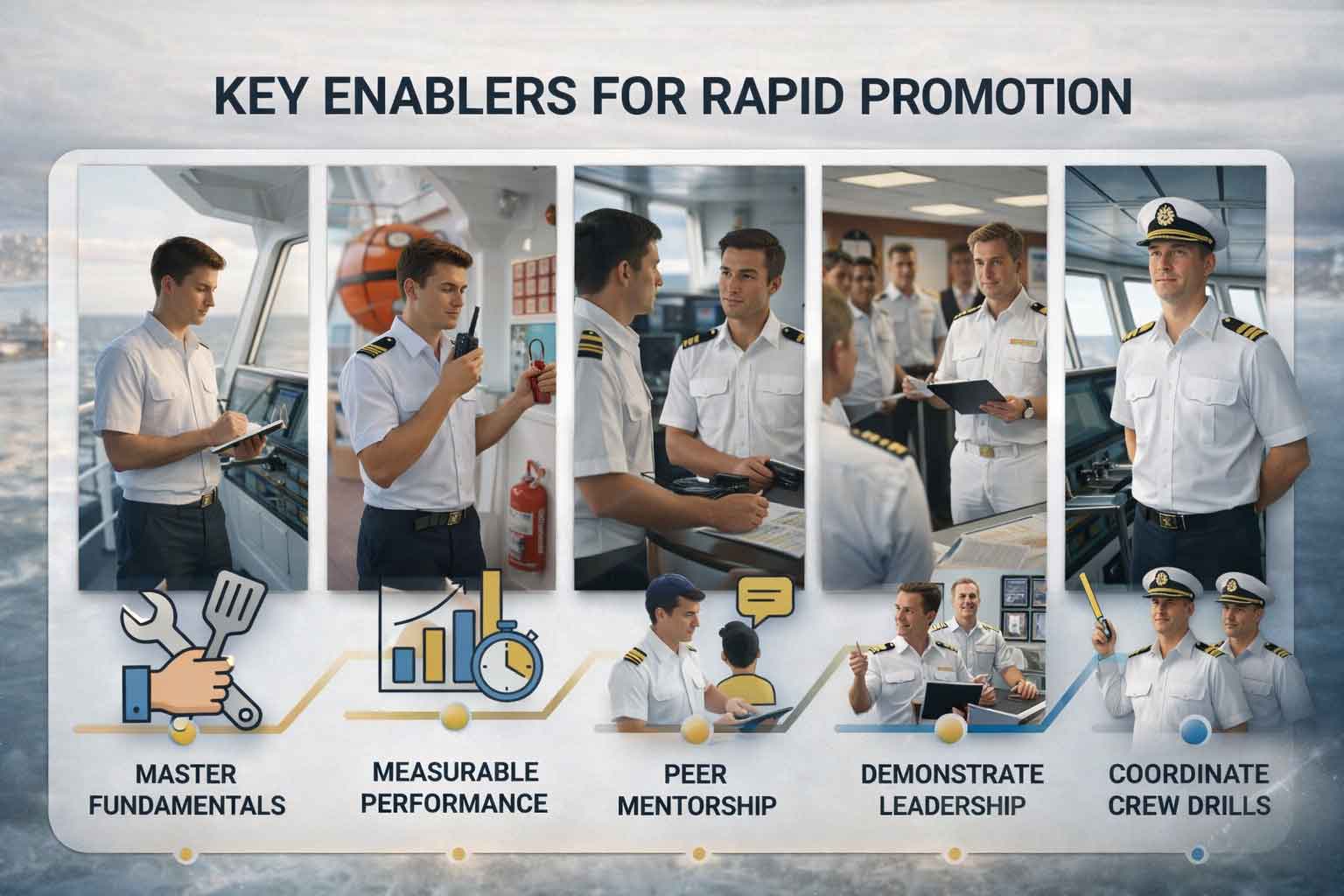
What Unlocks Promotion?
Moving up the bridge hierarchy is not only about sea time. It is about proving you are ready for absolute command and legal responsibility.
Why precision matters
Deck officers are trusted with thousands of lives. Precision means flawless ECDIS management, perfect chart corrections, and absolute adherence to COLREGs to ensure vessel safety at all times.
Why technical skill matters
Promotion depends on technical fluency. You must master radar plotting, dynamic positioning, ballast control, and emergency communication systems while understanding the physics of ship handling.
Why leadership matters
Bridge officers must lead under extreme pressure. Command presence is shown by guiding the deck team during mooring, coordinating lifeboat drills, and making split-second safety decisions calmly.
Why ethics matter
A senior officer's reputation is built on integrity. Following international maritime law without shortcuts builds the high level of trust required by the Master and the cruise line's technical management.
Officers who complete their next level of CoC (Certificate of Competency) exams early and demonstrate exceptional ship-handling skills often progress faster than standard timelines.
Common Mistakes That Slow Deck Promotion
Growth on the bridge is not only about navigation talent. Many officers stay in the same rank longer because of small habits that reduce trust, watchkeeping consistency, and command confidence.
The deck officers who grow fastest are often the ones who remove these mistakes early, stay coachable, and build trust through strong daily performance, maritime discipline, and total professionalism onboard.
How to Stand Out on the Bridge
The officers who promote fastest are not just technically skilled. They demonstrate superior situational awareness, professional ethics, and total dependability under pressure.
Why this stands out
Mastering your watch shows command readiness. It means you are ahead of the ship, identifying risks before they trigger alarms. Proactive navigation builds the level of trust required for higher rank responsibility.
Why this stands out
Communication is a primary safety tool. Officers who use standard marine vocabulary perfectly and maintain a calm, authoritative tone during complex maneuvers prove they can lead a bridge team during a crisis.
Why this stands out
Regulatory expertise shows professionalism. When an officer ensures 100% compliance without being prompted, it signals to senior management that they are ready to handle the legal accountabilities of a Chief Officer.
Why this stands out
Continuous learning is vital in modern navigation. Showing active interest in advanced ship handling or maritime law proves you are not just working a job, but actively building a career as a Master Mariner.
When the Captain and Staff Captain see you operating with precision and integrity, your path to promotion accelerates. In the deck department, trust is the currency of the bridge, earned through standards, consistency, and professional conduct.
A Day in the Life of a Deck Officer
Explore how a typical day onboard flows, from bridge watchkeeping to technical maintenance. Tap each stage to see what navigation officers are usually doing throughout the day at sea.
The bridge never sleeps.
Morning watch involves taking over the bridge, checking the GPS, radar, and AIS, monitoring traffic flow, and ensuring the vessel remains on the planned track.



Ready to Start Your Cruise Ship Navigation Journey?
If you are serious about building a professional deck career at sea, the next move is to take action. Explore open navigation roles, apply for opportunities, or strengthen your officer profile before submitting your application.
The deck officers who move forward fastest are usually the ones who organize their certificates early, present themselves well, and apply with a clear understanding of international maritime standards.
Frequently Asked Questions About Deck Officer Careers
Explore the most common questions regarding navigation roles, sea time requirements, and professional growth on the bridge.
How much do cruise ship Captains and Officers earn?
How long does it take to become a Captain?
What helps Deck Officers get promoted faster?
Is the savings potential higher for Officers than land-based roles?
Useful Pages for Future Deck Officers
If you want to move from interest to action, these pages will help you understand technical requirements, improve your application, and prepare for high-level command work onboard.