
Food and Beverage Career Path on a Cruise Ship
See how an onboard service career can progress from Assistant Waiter to senior Food and Beverage leadership, with practical examples of responsibility, promotion, and earning potential at sea.
Explore the F&B Timeline at Sea
Drag the progress line or tap a stage to move through the food and beverage journey, from entry level service to executive management onboard.

Assistant Waiter
This is where the journey begins. You learn table settings, service speed, menu knowledge, and how to support the senior servers under high pressure.
Salary Growth in Food & Beverage
Monthly salary ranges shown as a guide. Actual pay varies by company, vessel, contract, role, gratuities, and experience.

Why Cruise Salaries Are Powerful
Onboard income can go much further because many major living costs are already covered.
Your Growth Potential
From entry-level service roles to senior F&B leadership, the earning journey can grow dramatically over time.
How Fast Can You Grow?
Career progression depends on your performance, consistency, leadership, and the opportunities available onboard.
What helps you move up faster?
At this stage, promotion often comes from proving that you can support senior staff flawlessly, handle high table turnover, and maintain a positive attitude during exhausting shifts.
What changes at this level?
You are expected to shift from personal execution to team supervision, managing junior waiters, ensuring flawless timing with the galley, and resolving table issues instantly.
What unlocks the next jump?
Moving toward Assistant Manager requires visible leadership, cross-venue knowledge (bars, buffets, fine dining), financial awareness, and the ability to maintain standards across hundreds of crew.
What matters most at senior level?
Senior promotions depend on executive leadership, high-level financial accountability, global brand consistency, and the ability to inspire a diverse workforce under immense daily pressure.
Crew who show strong discipline, reliable performance, leadership potential, and the right attitude can sometimes progress faster than the standard timeline. Growth depends on performance, vacancies, strong references, and how consistently you deliver under pressure.

What Unlocks Promotion?
Moving up in Food & Beverage is not only about time. It is about proving that you are ready for more responsibility and guest interaction.
Why consistency matters
Cruise ship dining rooms depend on absolute reliability. Being consistent means arriving prepared, following exact table standards, working with discipline, and delivering flawless service even when the dining room is packed.
Why service skill matters
Promotion depends on more than a smile. You must understand complex menus, dietary restrictions, silver service flow, galley communication, timing, and how to keep guest satisfaction high at all times.
Why leadership matters
Future Head Waiters and Managers are trusted to stay calm, guide new assistants, resolve table complaints instantly, and help the service team stay focused during the most intense dinner rushes.
Why attitude matters
A strong attitude often separates average servers from future leaders. Professionalism, a willingness to learn wine lists, cultural respect, maturity, and positive energy help build vital trust with the F&B Director.
Crew who show exceptional service discipline, reliable performance, leadership potential, and the right guest-focused attitude can sometimes grow into management roles faster than the standard timeline.
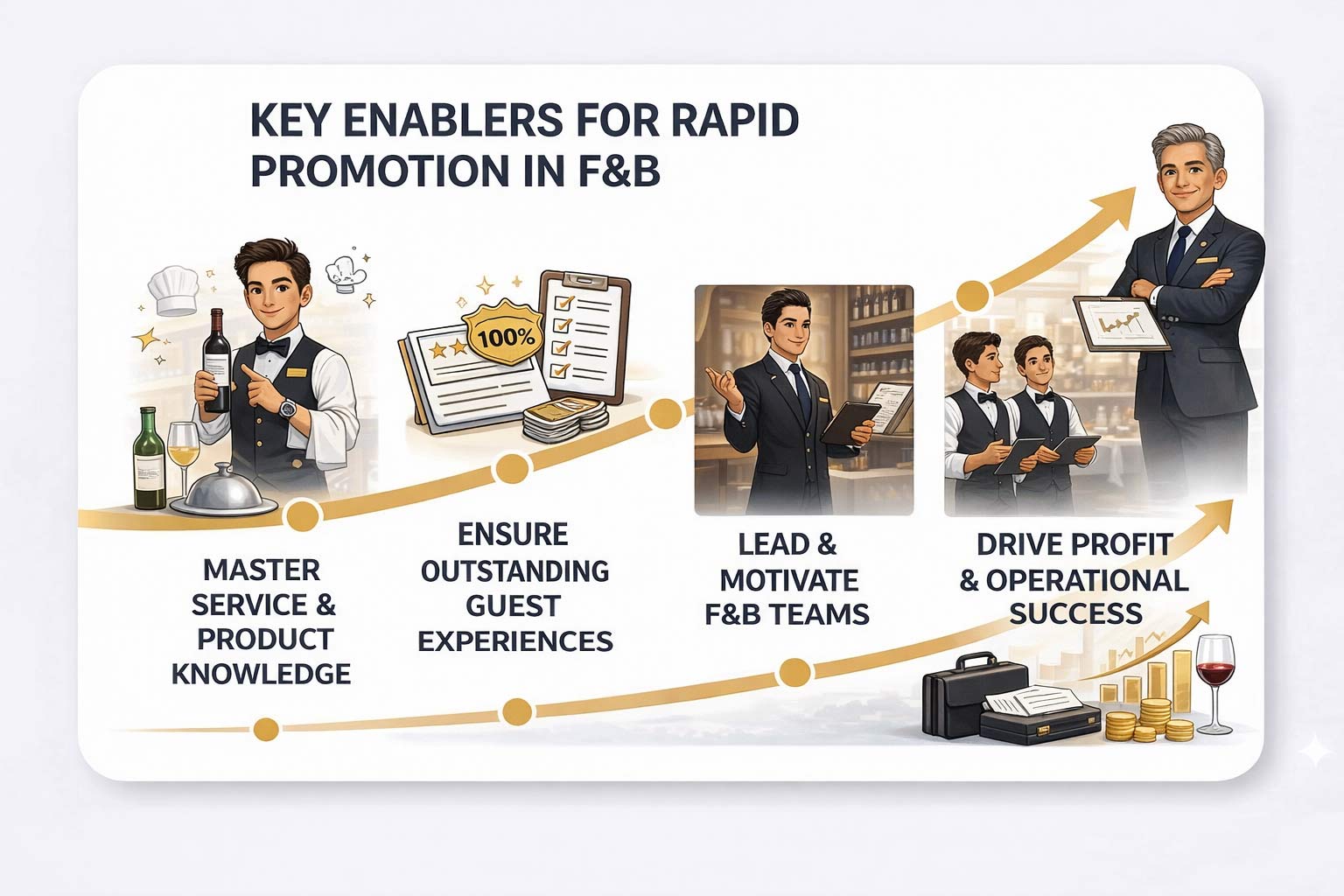
Common Mistakes That Slow Promotion
Growth onboard is not only about service skills. Many F&B staff stay in the same position longer because of small habits that reduce trust, consistency, and leadership confidence.
The F&B staff who grow fastest are often the ones who remove these mistakes early, stay coachable, and build trust through strong daily performance, discipline, and professionalism onboard.
How to Stand Out Faster
The food and beverage crew who move up fastest are usually not just skilled servers. They are dependable, coachable, disciplined, and trusted when guest pressure rises.
Why this stands out
Owning your station shows maturity and discipline. It means your tables are set, side-stations are stocked, and you are fully prepared before the first guest arrives. That kind of ownership builds trust quickly in a professional restaurant environment.
Why this stands out
Pressure reveals professionalism. When service becomes intense, servers who stay calm, communicate clearly with the galley, and keep guest satisfaction stable are often seen as stronger candidates for future leadership.
Why this stands out
Crew who ask for feedback show coachability. They usually improve faster, correct service errors earlier, and make it easier for Head Waiters to invest time in them because they clearly want to grow.
Why this stands out
Reliability is one of the strongest promotion signals onboard. Being punctual, prepared, steady, and dependable every shift shows that management can count on you when standards and service timing matter most.
When senior management know they can rely on you, your growth can accelerate. In many cruise ship dining rooms, trust is built through standards, attitude, consistency, and the way you perform when pressure rises.
A Day in the Life of Food and Beverage Crew
Explore how a typical day onboard flows, from the morning briefing to the final station reset. Tap each stage to see what service staff are usually doing throughout a day at sea.
The day begins with alignment.
Morning shifts start with a briefing on daily specials, guest dietary needs, and station assignments. The team ensures all side stations are stocked and the dining room is guest-ready.
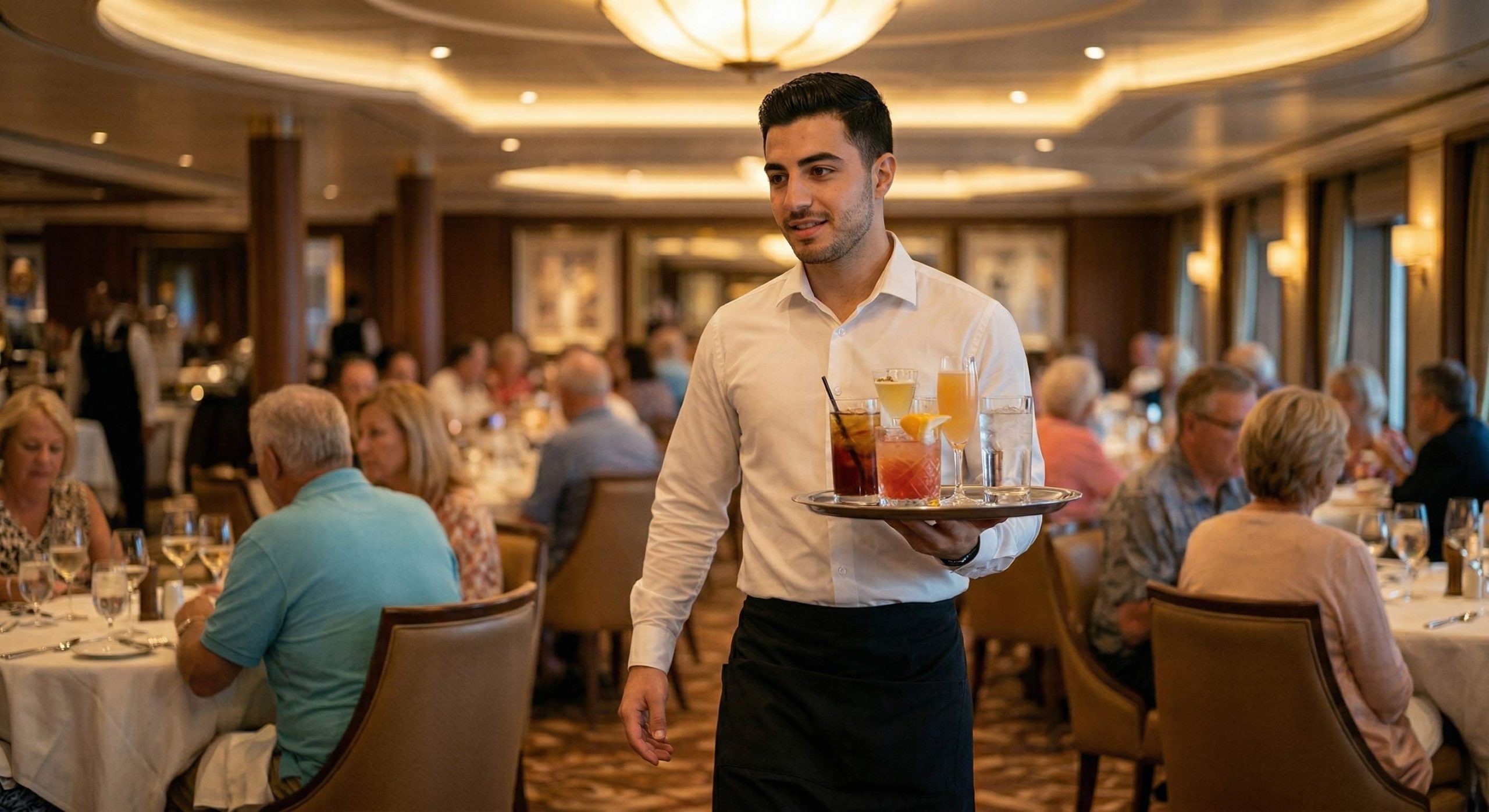


Ready to Start Your Food and Beverage Journey?
If you are serious about building a food and beverage career at sea, the next move is to take action. Explore open service roles, apply for opportunities, or strengthen your profile before submitting your application.
The service crew who move forward fastest are usually the ones who prepare properly, present themselves well, and apply with confidence and realistic expectations about life and work onboard.
Frequently Asked Questions About Food and Beverage Careers
These are some of the most common questions people ask when considering a food and beverage career at sea.
How much does cruise ship service crew earn?
How long does it take to become a Head Waiter?
What helps service staff get promoted onboard?
Do F&B crew save more money than land based staff?
Useful Pages for Future F&B Service Crew
If you want to move from interest to action, these pages will help you understand the requirements, improve your application, and prepare properly for work onboard.