Explore the Photography Timeline at Sea
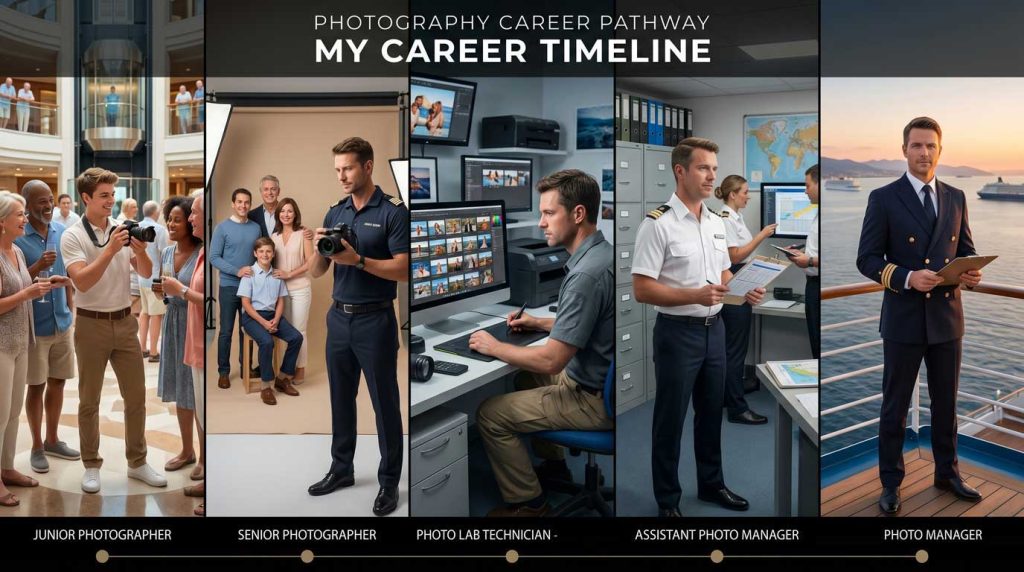
Drag the progress line or tap a stage to move through the photography journey, from capturing guest memories to managing the entire imaging department onboard.

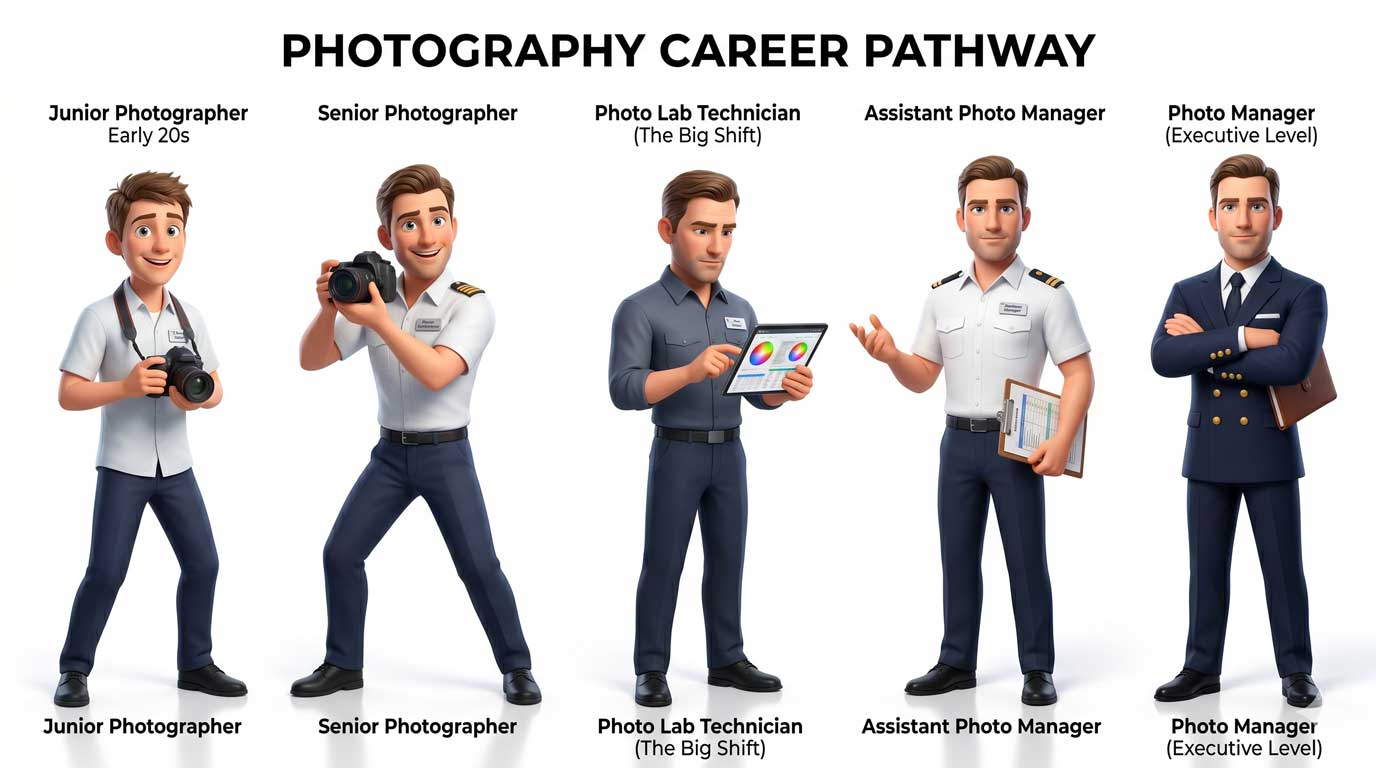
Junior Photographer
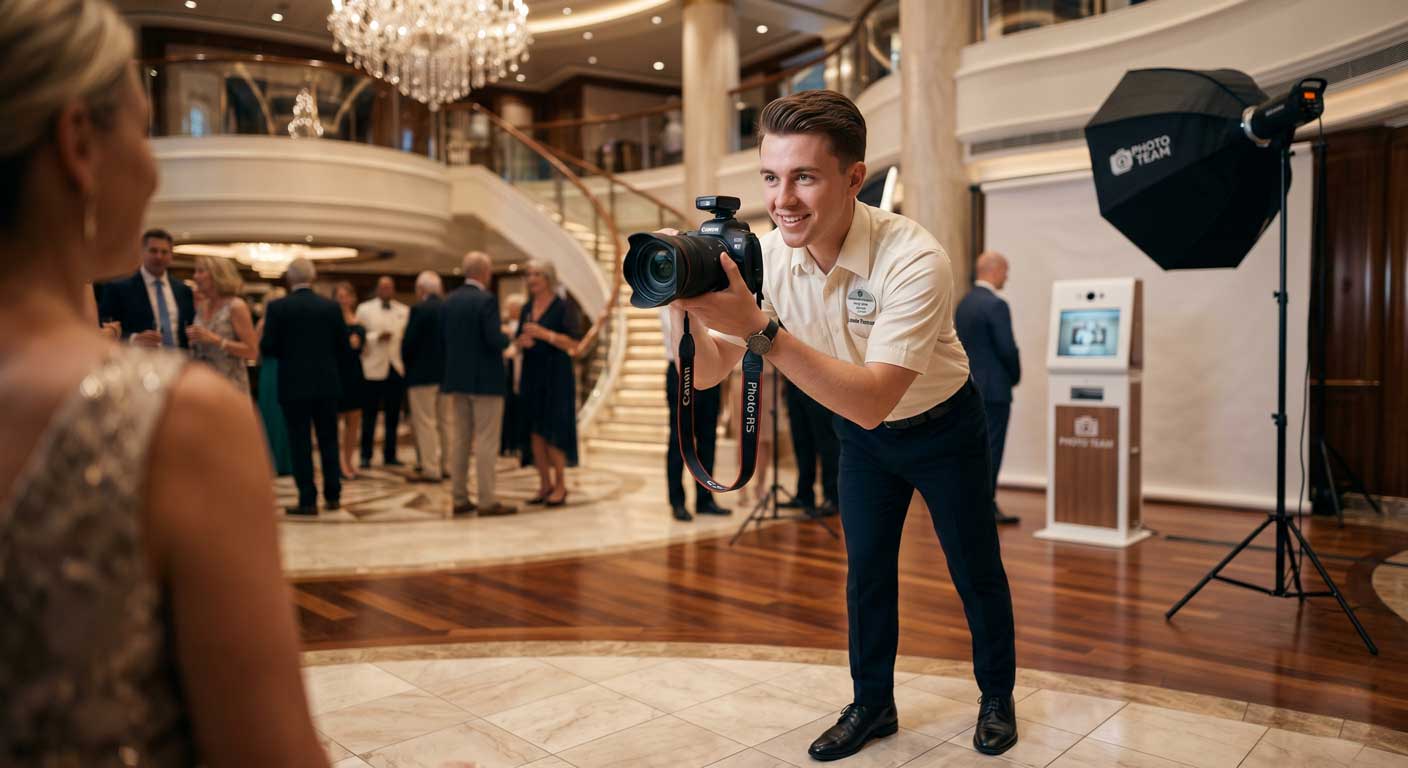
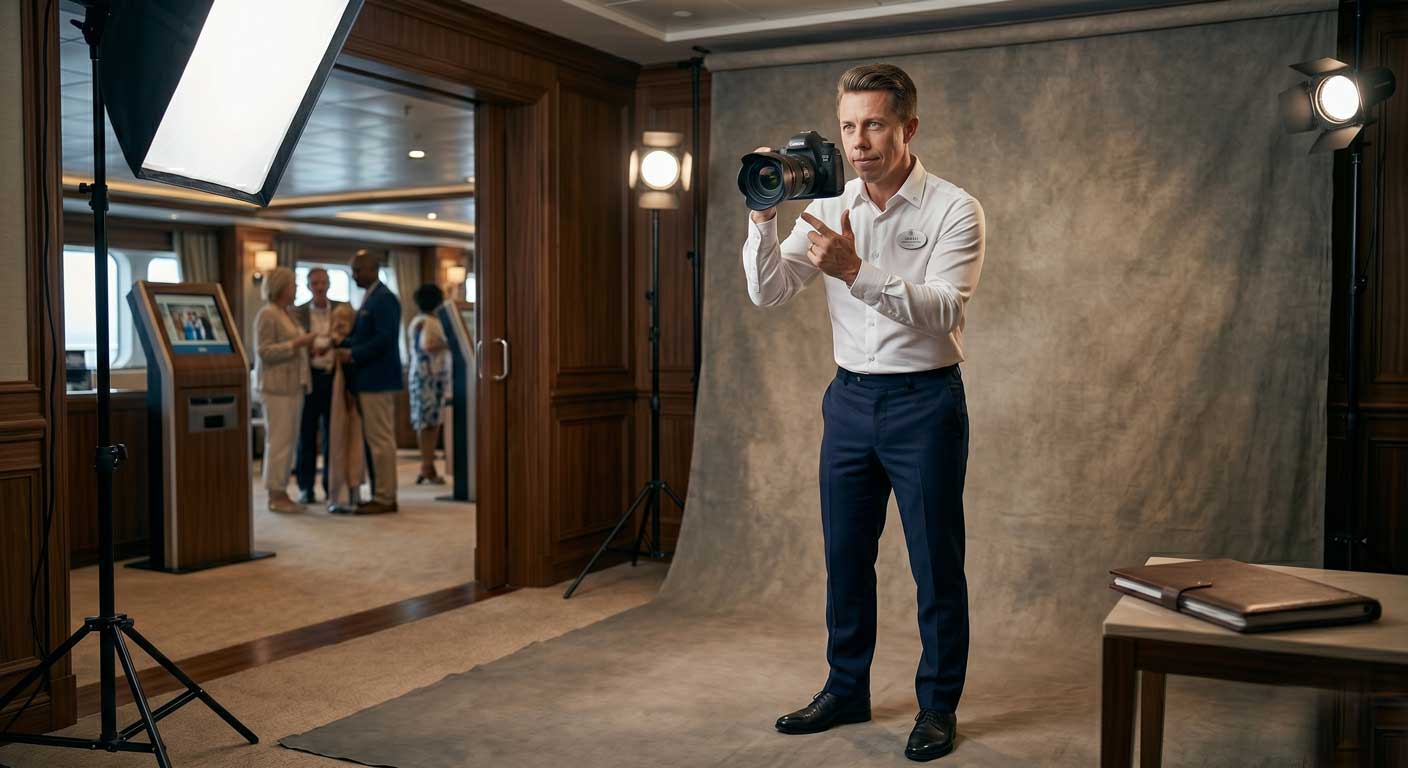
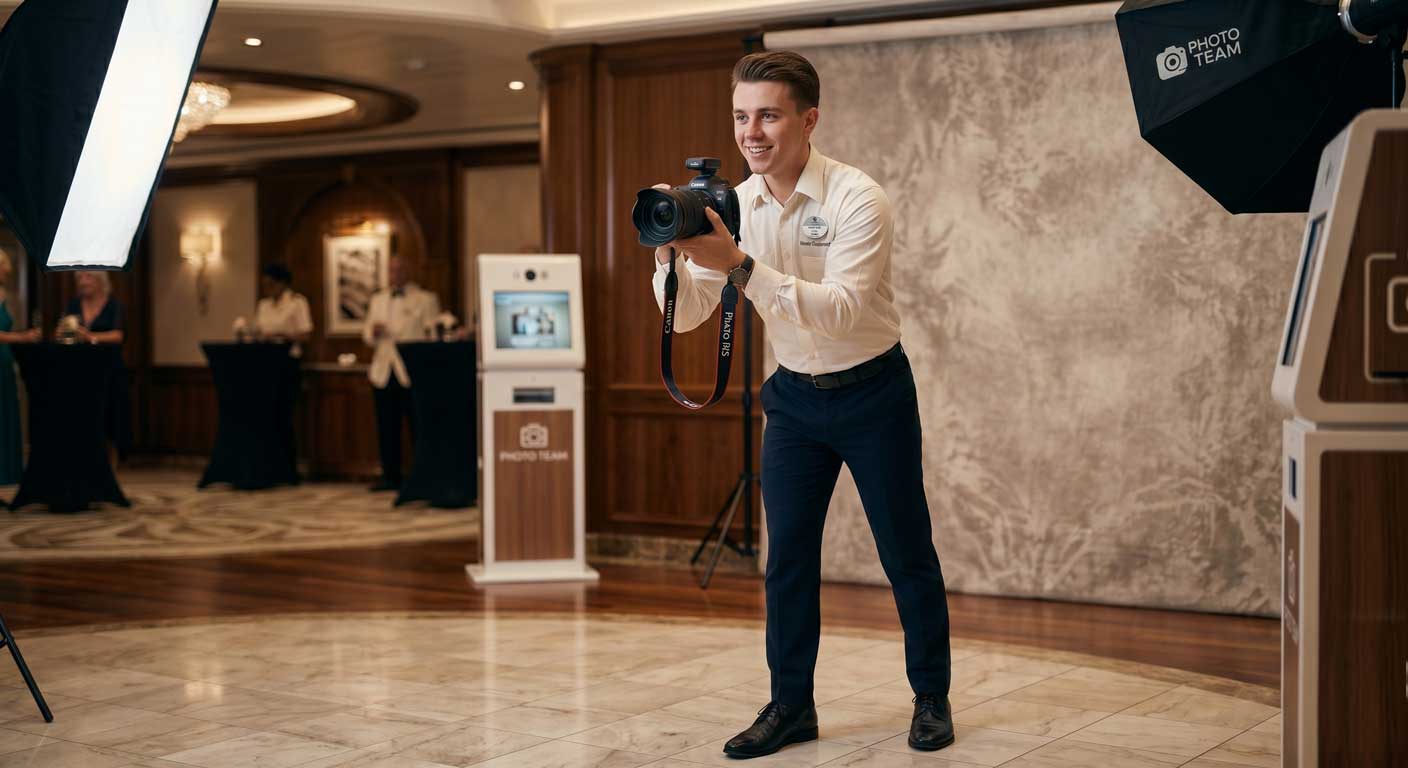
The journey begins with high-energy guest interaction. You master the basics of event photography, studio lighting, and the fast-paced workflow of a cruise ship photo gallery.
Salary Growth in Onboard Imaging
Monthly salary ranges shown as a base guide. Total earnings for photographers significantly increase through performance-based sales commissions and portrait targets.
Why Photography Salaries Are Powerful
Onboard photography income offers unique value because your professional earnings are protected from the high overheads of shore-side creative work.
Your Creative Growth Potential
From entry-level shooter roles to senior imaging leadership, the earning journey for photographers scales significantly with sales results and department management.
How Fast Can You Grow in Photography?
Onboard imaging progression is driven by sales performance, technical mastery of lighting and editing, and your ability to manage a commercial studio environment.
What helps you move up faster?
At this stage, promotion comes from exceeding individual sales targets, demonstrating creative consistency in portraits, and mastering the digital workflow without technical errors.
What changes at this level?
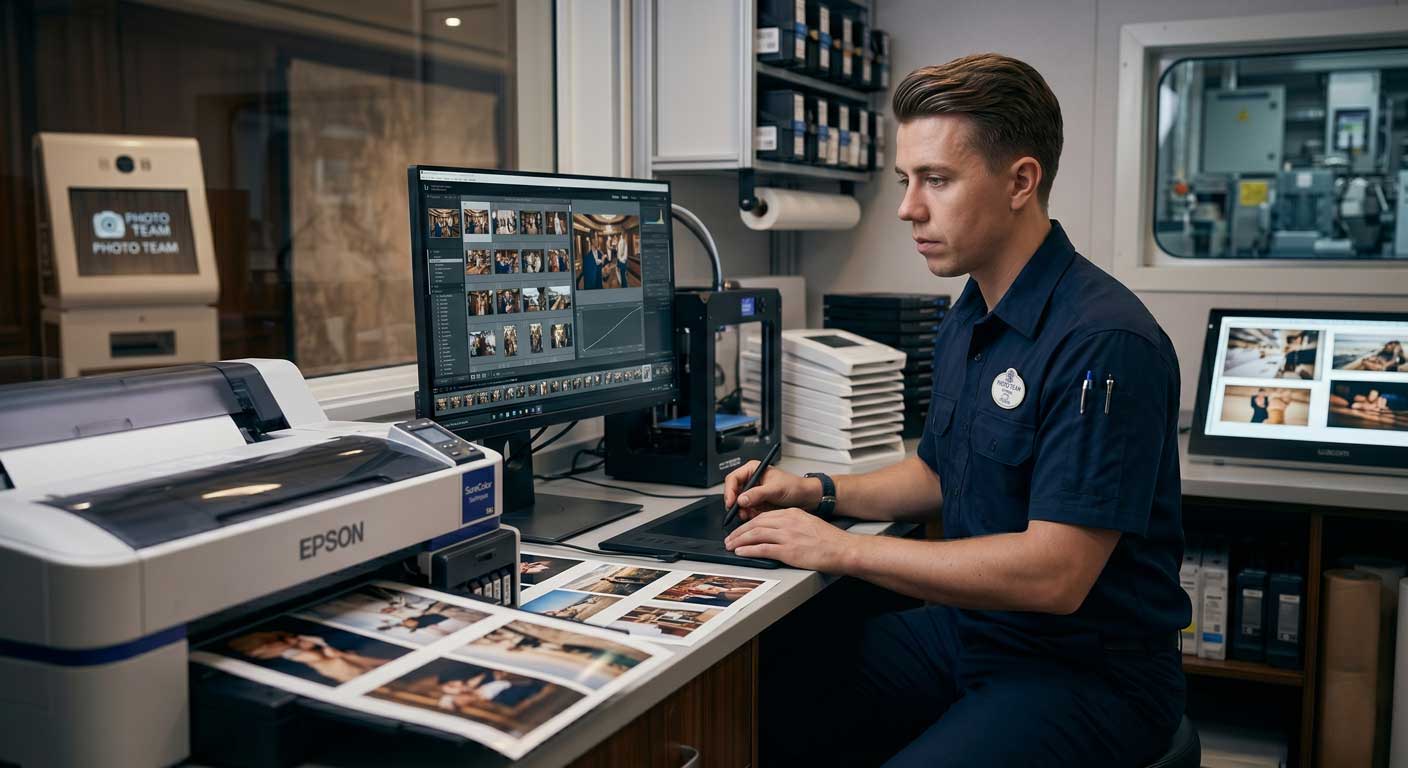
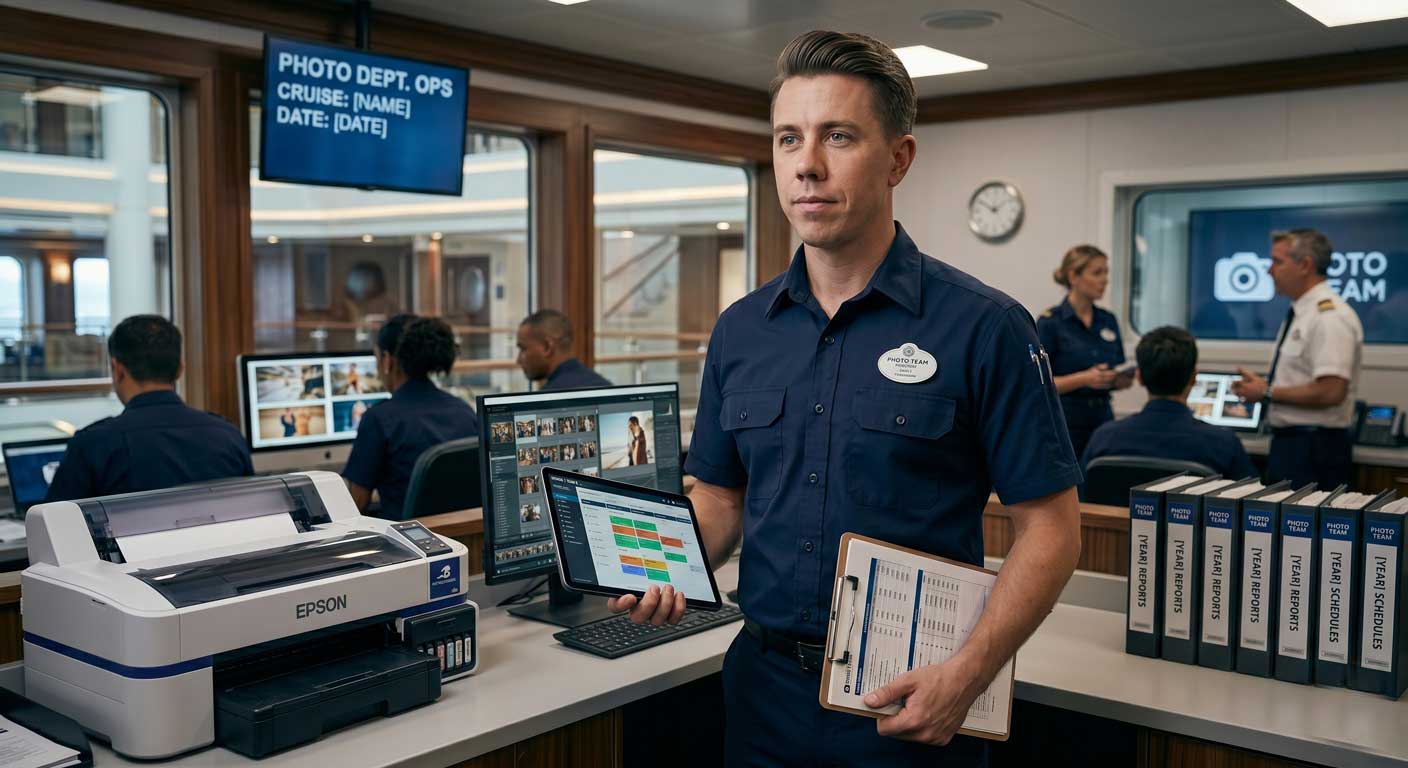
You shift from shooting to managing the department's output. You are expected to handle large-format printing, maintain hardware, and ensure the photo gallery is visually perfect for guest viewing.
What unlocks the next jump?
Moving to Asst. Manager requires commercial awareness. You must show you can analyze sales data, lead high-energy morning briefings, and manage high-value VIP private shoots.
What matters most at senior level?
The Photo Manager is the department head. Success depends on strategic planning, total accountability for revenue, and the ability to maintain 5-star brand integrity across the imaging team.
Photographers who consistently hit high sales volumes, show strong discipline in asset control, and demonstrate leadership potential can often progress faster than standard timelines. Growth depends on performance and technical reputation.

What Unlocks Photography Promotion?
Advancing in the imaging department is not just about taking great photos. It is about proving you can drive revenue and manage a commercial studio.
Why revenue matters
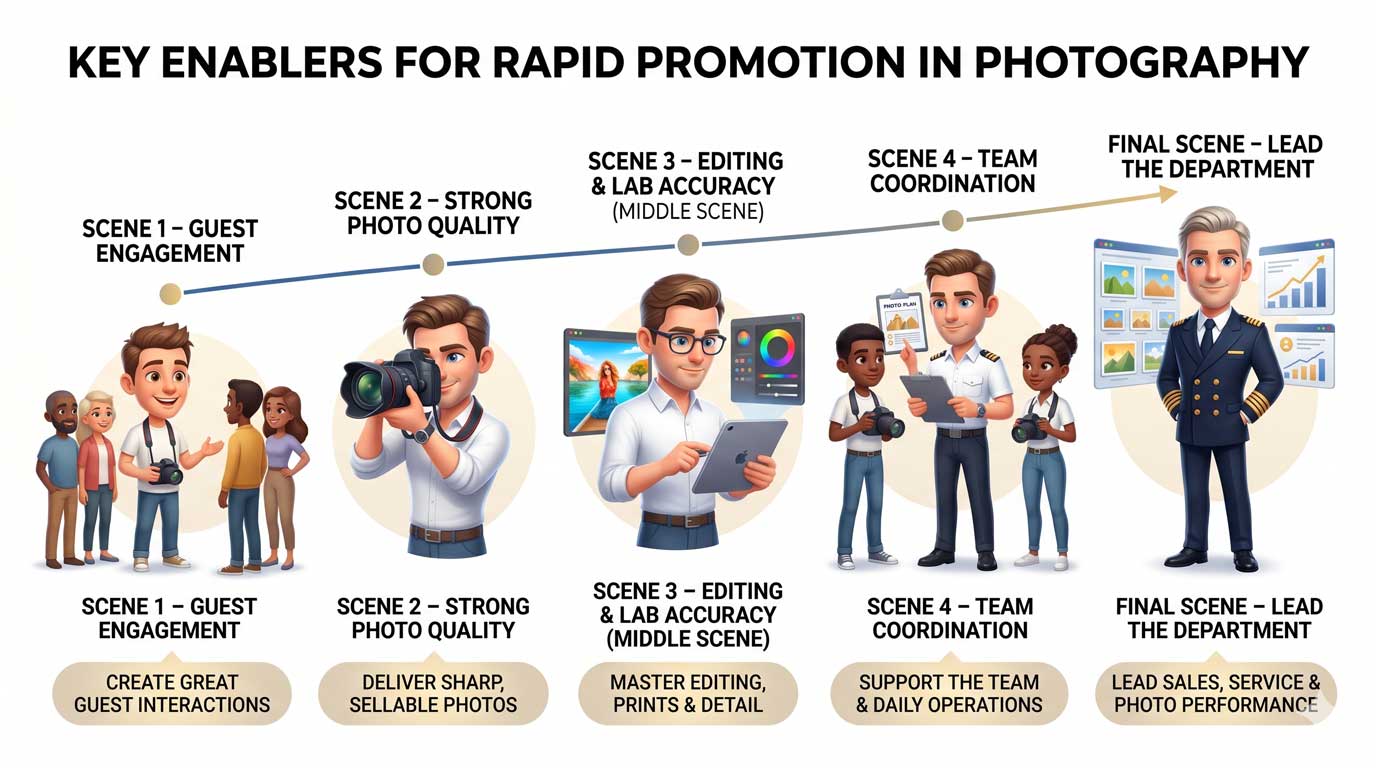
Onboard photography is a business. Future managers must prove they can move guest interest from a simple photo shoot to a high-value purchase. Mastering the "close" is as vital as mastering the camera.
Why technical skill matters
Promotion follows those who can produce 5-star results in any environment. Whether it's a beach excursion or a formal studio night, you must deliver perfect exposures and sharp focus under strict time constraints.
Why engagement matters
The best photos come from comfortable guests. Crew who can lead a crowd, entertain children, and make VIPs feel at ease are the ones trusted with high-stakes wedding and private portrait assignments.
Why responsibility matters
Imaging gear is expensive and difficult to replace at sea. Showing absolute discipline in maintaining equipment, managing digital backups, and tracking inventory is essential for management-level trust.
Crew who consistently exceed their individual sales KPIs, maintain perfect workflow discipline, and show a natural ability to mentor junior shooters are frequently promoted to Senior or Specialist roles within two contracts.
How to Stand Out in Photography
The photography crew who move up fastest are usually not just talented. They are commercially driven, coachable, disciplined, and trusted when pressure rises.
Why this stands out
Owning your studio shows maturity and discipline. It means your lighting setup is ready, your cameras are calibrated, your attention is strong, and your area stays under control even before someone asks. That kind of ownership builds trust quickly in a professional imaging department.
Why this stands out
Pressure reveals professionalism. When the photo gallery becomes intense, photographers who stay calm, communicate clearly, and keep sales accuracy stable are often seen as stronger candidates for future growth and leadership.
Why this stands out
Crew who ask for feedback show coachability. They usually improve faster, correct technical mistakes earlier, and make it easier for senior leaders to invest time in them because they clearly want to grow in their craft.
Why this stands out
Reliability is one of the strongest promotion signals onboard. Being punctual, prepared, creative, and dependable every shift shows that others can count on you when standards and revenue targets matter most.
When senior photo managers know they can rely on you, your growth can accelerate. In many cruise ship photo departments, trust is built through technical standards, attitude, consistency, and the way you perform when pressure rises.
A Day in the Life of a Cruise Photographer
Explore how a typical day onboard flows, from sunrise gangway shoots to high-energy studio portraits and gallery sales. Tap each stage to see what photographers are usually doing throughout the day at sea.
Capturing guest arrivals.
The day often starts on the pier or gangway. Photographers welcome guests back from excursions, capturing high-energy moments with local backdrops or mascot characters to start the daily revenue flow.

Ready to Start Your Cruise Ship Photography Journey?
If you are serious about building a professional imaging career at sea, the next move is to take action. Explore open photography roles, apply for positions, or sharpen your portfolio before submitting your application.
The photographers who move forward fastest are usually the ones who prepare properly, understand revenue-driven imaging, and apply with a professional portfolio and realistic expectations.
Frequently Asked Questions About Cruise Ship Photography Careers
These are the most common questions professionals ask when considering a maritime imaging career and commercial photography roles at sea.
How much do cruise ship photographers earn?
Do I need my own camera equipment onboard?
What helps photographers get promoted faster?
Is photography considered an Officer role?
Useful Pages for Future Photography Officers
If you want to move from creative interest to professional action, these pages will help you understand maritime requirements, improve your portfolio, and prepare for a photography career at sea.