Cruise ship document guide

Cruise Ship Crew Documents: Passport, Visas, Medicals, Seaman’s Books and STCW

Cruise ship applications can involve several documents, but they do not all become necessary at the same stage. The safest approach is to secure your core identity documents first, then follow the employer’s instructions for medicals, visas, seaman’s books, safety training and role-specific certificates.

This hub explains what the main documents are for, who may need them, when they usually become relevant and which specialist Crew Life at Sea guide to read next.

Do not buy every document before you have a job

Some documents are useful to prepare early. Others are linked to a specific cruise line, ship, flag, joining port, nationality or role. Spending money too early can leave you with a certificate or medical that the employer does not accept.

Documents you can usually prepare first

A valid passport, accurate CV, contactable references and copies of your existing qualifications are sensible foundations. You can also identify early whether your passport is nearing expiry or whether names differ between your records.

Keeping clear digital scans of documents you already hold is useful before recruitment moves quickly. Store them securely and make sure every scan is readable from edge to edge.

Documents that often need employer confirmation

Visa category, approved medical provider, seaman’s book, STCW course, security course and other maritime certificates can depend on the assignment. Even applicants going to similar jobs may receive different instructions because their nationality, ship or route is different.

When an employer or recruiter sends a document checklist, use that list as the working authority for your joining file and ask before substituting a different certificate or provider.

Key rule: never pay an unofficial person who promises a guaranteed visa, medical certificate, seaman’s book, STCW certificate or job. Use verified providers and the instructions issued for your real application.

A practical cruise crew document roadmap

The exact order can change, but this sequence helps applicants understand which documents are foundational and which are normally tied to a later joining stage.

01

Identity and experience

Valid passport, professional CV, employment history, references and copies of qualifications you already hold.

Start here
02

Offer and role confirmation

Job offer, recruiter instructions, contract or joining information establish which additional documents actually apply.

Confirm the assignment
03

Medical fitness

Complete the approved seafarer or pre-employment medical requested for the ship, role or company.

Use the accepted provider
04

Safety and security training

Complete STCW or security training that is specifically required for your duties and accepted by the employer.

Role dependent
05

Visa and seafarer documents

Apply for C1/D, Schengen, other visas or a seaman’s book only when the route, ship and requirement are clear.

Assignment dependent
06

Joining and travel file

Final contract, joining letter, flight details, visa, medical, certificates and any port or immigration paperwork travel with you.

Keep digital backups

Passport: the document everything else depends on

Your passport is normally the identity document that connects your visa applications, employment records, medical file and international travel. If the name or passport number changes, other documents may need to be updated as well.

Check passport validity early. Employers and immigration authorities can have their own validity requirements for the planned travel period, so do not wait until joining arrangements are underway to discover that your passport is close to expiry.

If your CV uses a preferred name but your passport has a different legal name, make sure official forms use the identity details required by the relevant authority. Do not shorten, rearrange or “correct” passport details yourself on formal applications.

Read Passport Requirements
01
Check the expiry dateMake sure validity covers the recruitment and planned travel period required for your assignment.
02
Use the exact legal nameVisa forms, bookings and joining records should match the passport where required.
03
Inspect the conditionDamaged pages, unreadable details or a damaged biometric page can create travel problems.
04
Save a secure scanKeep a clear copy separate from the physical passport, but protect sensitive identity data.

Crew visas: the correct visa depends on the route

There is no single worldwide “cruise ship visa.” Visa requirements depend on nationality, where you join or transit, the itinerary and the immigration rules that apply to your assignment.

United States crew travel

C1/D Visa

The C1/D visa is commonly associated with crew who need to transit through or join a vessel in the United States. The application process and interview location depend on the applicant’s circumstances and current official procedures.

Wait until you have the correct employer or joining information before assuming dates, route or supporting documents.

Open the C1/D Visa Guide
European travel

Schengen Visa

Some crew may need a Schengen visa because of their nationality and the way they enter, join or travel through the Schengen Area. Another crew member’s experience does not automatically apply to you.

Confirm which country is responsible for the application and which supporting documents are required for your route.

Open the Schengen Visa Guide
Other destinations

Itinerary-specific visas

Assignments can also involve other national visas or entry permissions. These should be driven by the confirmed joining port, transit route, vessel itinerary and the applicant’s passport.

Use the employer checklist and official immigration instructions instead of buying a generic “crew visa package.”

Open Visa Checklists
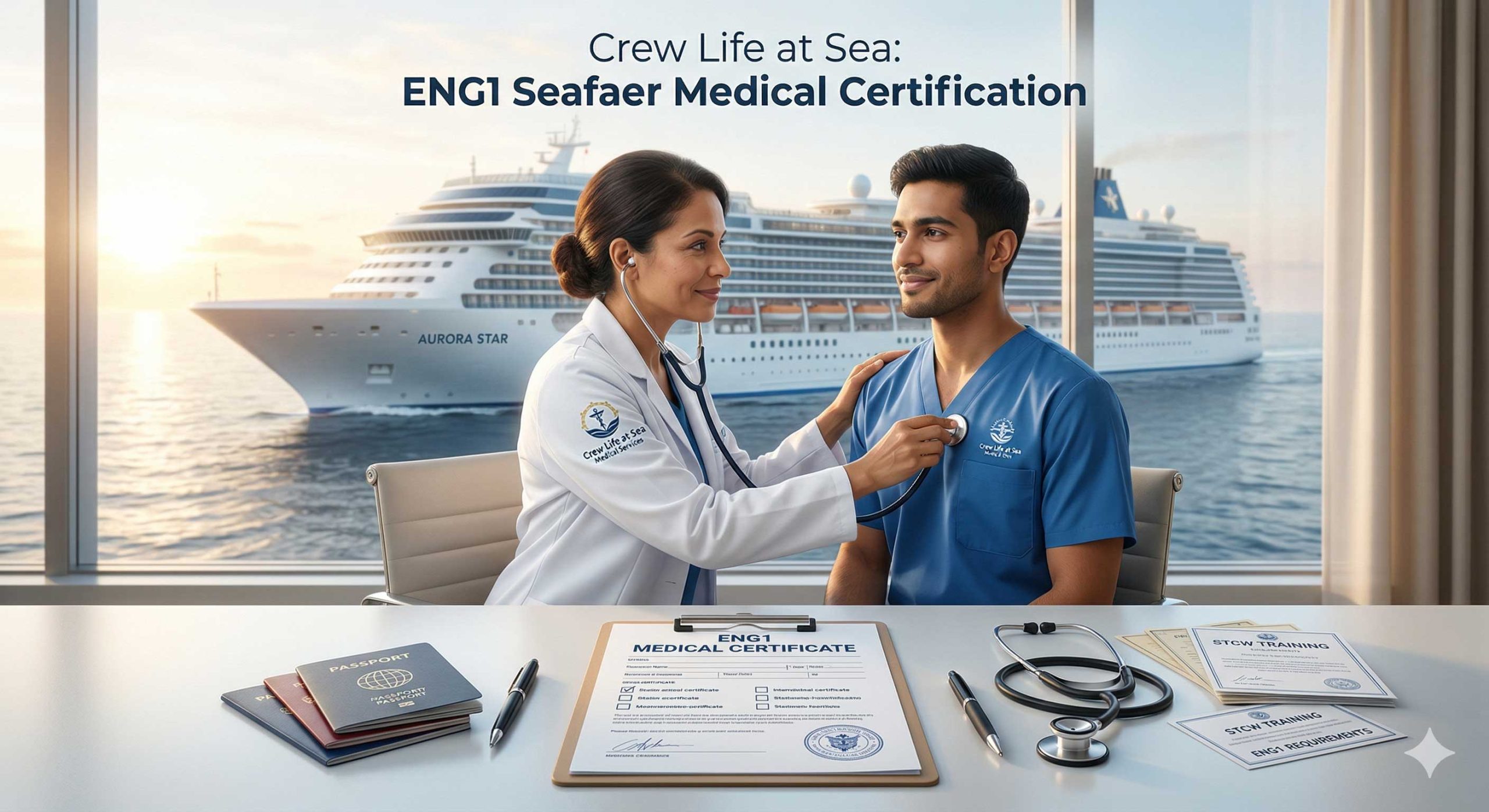
ENG1 seafarer medical document for cruise ship crew

Medical certificates: use the one your assignment accepts

Seafarers may be asked to complete a medical examination before joining. The purpose is to establish whether the person is medically fit for the work and environment they are being assigned to.

Applicants often hear terms such as ENG1, PEME and SAMSA medical. These are not labels you should treat as automatically interchangeable. The accepted certificate, doctor or clinic can depend on the cruise line, vessel, flag, role and company policy.

Do not repeat a medical simply because another applicant completed a different one. Ask which certificate and approved provider your own application requires.

MedicalWhat it refers toWhat to do before bookingGuide
ENG1A UK seafarer medical fitness certificate used in maritime employment contexts.Confirm that ENG1 is the certificate accepted for your assignment and use an appropriately approved doctor.ENG1 Guide
PEMEA pre-employment medical examination process used by some cruise employers or maritime programmes.Use the clinic, test list and process your employer or approved programme requires.PEME Guide
SAMSAA South African seafarer medical route connected with SAMSA requirements and approved practitioners.Confirm whether a SAMSA medical applies to your role or certification pathway.SAMSA Guide

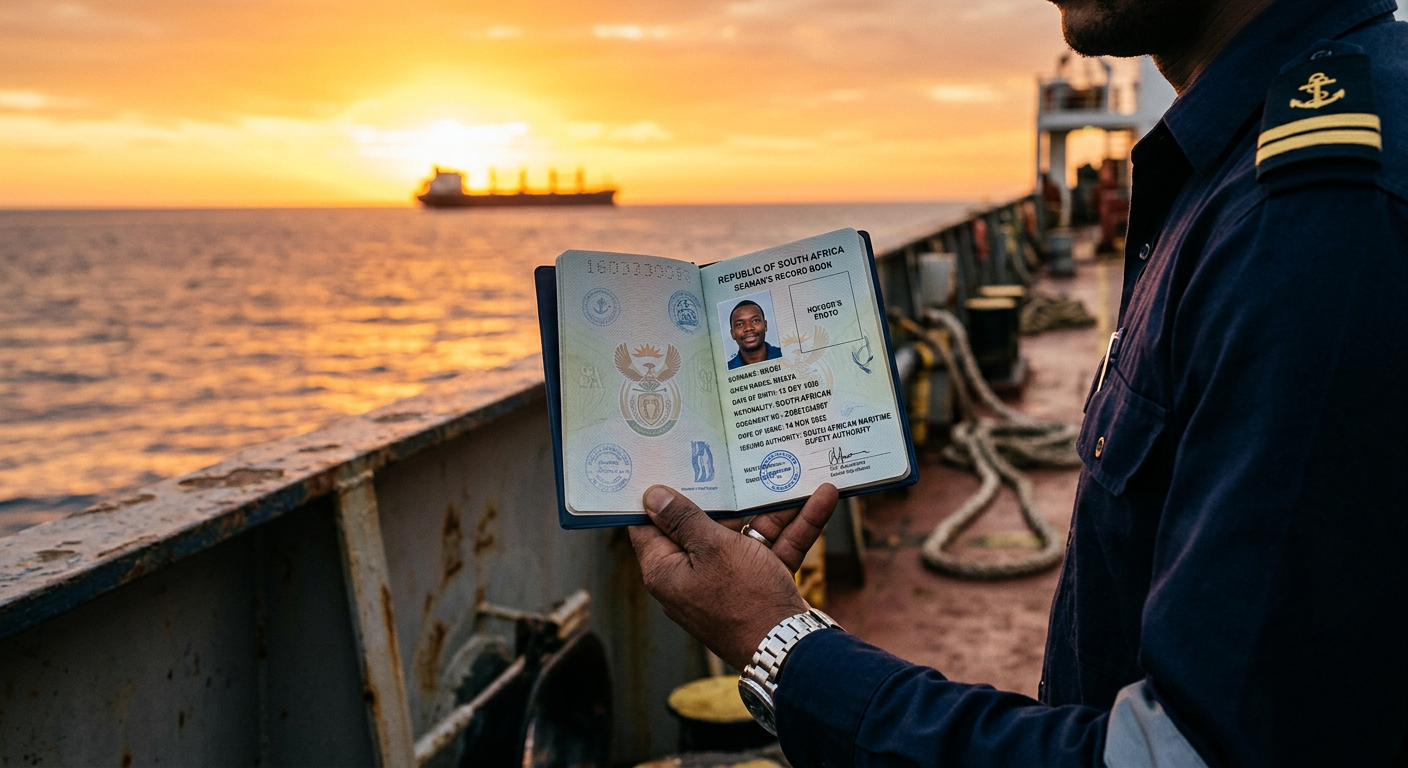
Seaman’s Book: useful, but not universal

A Seaman’s Book, discharge book or seafarer identity document can record seafarer identity and service, depending on the issuing administration and the document type. Some cruise employees are instructed to obtain one for a particular flag or assignment, while others may not need the same document at the same stage.

The country named on a Seaman’s Book does not necessarily mean you must be a citizen of that country. Eligibility and application rules depend on the issuing administration and the route available to the applicant.

Do not buy a random Seaman’s Book because someone says “all crew need one.” Confirm which issuing administration, if any, your cruise line or joining process requires.

Seaman's Book held for seafarer document preparation

STCW and security training

Safety and security training is important in maritime work, but the correct course depends on the role and duties. Course names that sound similar are not automatically substitutes for one another.

Core maritime safety

STCW Basic Safety Training

Basic Safety Training covers fundamental seafarer safety competencies. Employers may require recognised STCW training for shipboard roles, but applicants should confirm the accepted course and provider before paying.

Read the STCW BST Guide
General security awareness

Security Awareness Training

Security Awareness training is intended for personnel who need awareness of ship-security responsibilities without necessarily carrying designated security duties.

Read the Security Awareness Guide
Designated security duties

PDSD

Proficiency in Designated Security Duties applies where the seafarer has assigned security responsibilities. It should not be treated as automatically required for every cruise employee.

Read the PDSD Guide

Other documents that can become part of your joining file

The final document pack is wider than passports, visas and STCW. These items may become relevant according to the role, employer and route.

Police clearance

Some recruitment or visa processes may ask for a criminal-record or police-clearance document. Obtain the correct version for the country and purpose requested.

Police Clearance Guide

Qualifications and licences

Trade certificates, degrees, hospitality qualifications, professional licences and Certificates of Competency should be presented accurately and only where relevant to the role.

Employment references

References help verify work history. Keep recent contact details for employers or supervisors who are authorised to confirm your experience.

Contract and joining letter

Keep the latest signed or issued version. Joining letters can also support visa, airport or port procedures when specifically requested.

Vaccination or health records

Some itineraries, employers or destinations may request particular health documentation. Follow current instructions for the real route rather than old crew rumours.

Flights and travel confirmations

Keep flight details, hotel bookings if supplied, joining-port instructions and emergency contact information together for travel day.

Passport photographs

Some applications ask for specific photo dimensions or digital formats. Use the exact specification instead of assuming one passport photo works everywhere.

Copies and digital backups

Carry documents the way your employer instructs, and keep secure digital copies in case a paper document needs to be referenced while travelling.

Role-specific certificates

Medical, deck, engine, security, childcare, food-safety, spa or other specialist roles may require additional professional evidence beyond general crew documents.

Build one controlled document file

Problems often happen because applicants have multiple versions of the same document scattered between email, WhatsApp, cloud storage and paper folders. Build one organised file and keep it current.

A simple document tracker can include the document name, issuing authority, issue date, expiry date, application status and where the original is stored. This becomes especially useful once medicals, visas and training certificates start arriving at different times.

Never edit dates, document numbers or official information inside scans. If something is wrong, correct it through the proper issuer or application process.

PassportRecord expiry date and keep one clear scan of the identity page.
VisasTrack application status, appointment date, issue date and validity period.
MedicalRecord certificate type, approved doctor or clinic and expiry date.
Seaman’s BookRecord issuing administration, number, validity and whether the employer specifically requires it.
STCW / SecurityKeep certificate names, provider details and expiry or refresher information where applicable.
Contract / JoiningKeep only the latest versions together with current travel instructions.
Final joining-file checklist

Before you send documents
  • Check that names and passport numbers match the source documents.
  • Confirm every page is complete, readable and not cut off.
  • Check issue and expiry dates before uploading or emailing anything.
  • Use the file format and naming convention requested by the recruiter.
  • Send sensitive documents only through the approved channel for your application.
Before you travel to join the ship
  • Carry the originals your employer specifically tells you to bring.
  • Keep passport, visas, medical and joining documents easy to reach during travel.
  • Save secure digital copies separately from the physical documents.
  • Carry the latest flight, hotel and joining-port instructions.
  • Keep recruiter or emergency contact details available if travel changes.

Cruise ship crew documents FAQ

The final requirements for any applicant come from the employer, relevant authority and the actual travel route. These answers explain the most common preparation questions.

Which document should I get first?

Start by checking your passport, CV, references and qualifications you already hold. Other documents such as a medical, visa, Seaman’s Book or STCW course should normally be matched to the real vacancy and joining instructions.

Do all cruise ship crew need a Seaman’s Book?

No. Requirements vary by ship, flag, role and employer. Obtain the specific Seaman’s Book requested for your assignment rather than purchasing one at random.

Do I need C1/D and Schengen visas?

Not automatically. Visa requirements depend on nationality and the confirmed joining, transit and itinerary arrangements. Some crew may need one, both, another visa or neither.

Is ENG1 the same as a PEME?

They are different medical routes. Your employer should confirm which medical certificate and approved provider apply to your assignment.

Does every crew member need STCW Basic Safety Training?

STCW requirements depend on the maritime role and employer. Many shipboard positions require recognised safety training, but confirm the exact course and acceptance before paying.

Should I get a police clearance before applying?

Only when it is relevant to the recruitment, visa or joining process. Police clearances can take time, but they can also have issue-date requirements, so follow the instructions for your real application.

Can I send photographs of documents from my phone?

Follow the recruiter’s requested format. When scans are accepted, they should be clear, complete, readable and free from glare or cropped edges. Protect sensitive documents when storing or sending them.

What if two documents show different names?

Do not try to hide or edit the difference. Ask the relevant recruiter or issuing authority what supporting proof or correction is required so your official records remain consistent.

Get the right documents for the right job at the right time

A strong joining file is not the one with the most certificates. It is the one with accurate, valid documents that match the cruise line, role, route and instructions for your actual assignment.

Scroll to Top