Explore the Medical Timeline at Sea
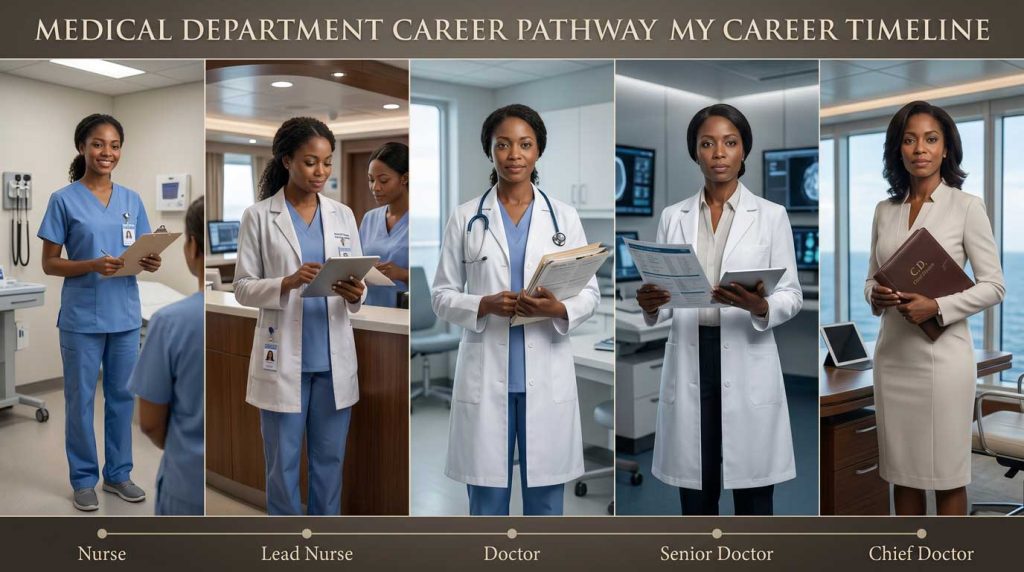
Drag the progress line or tap a stage to move through the healthcare journey, from entry level nursing to leading the ship's entire medical operation.

Nurse
You provide frontline care to guests and crew, assist doctors, manage clinic operations, and respond to onboard medical situations.
Salary Growth Across the Medical Path
Monthly salary ranges shown as a guide. Medical Officers on cruise ships are high-ranking professionals with salaries reflecting their specialized clinical expertise.

Why Medical Salaries Are Powerful
Onboard healthcare income offers exceptional value because your professional salary is almost entirely protected from shore-side overheads.
Medical Career Growth Potential
From essential nursing roles to senior medical leadership, the healthcare journey at sea offers substantial professional and financial scaling.
How Fast Can You Grow in Medical?
Career progression depends on your clinical performance, consistency, leadership, and the opportunities available onboard.
What helps you move up faster?
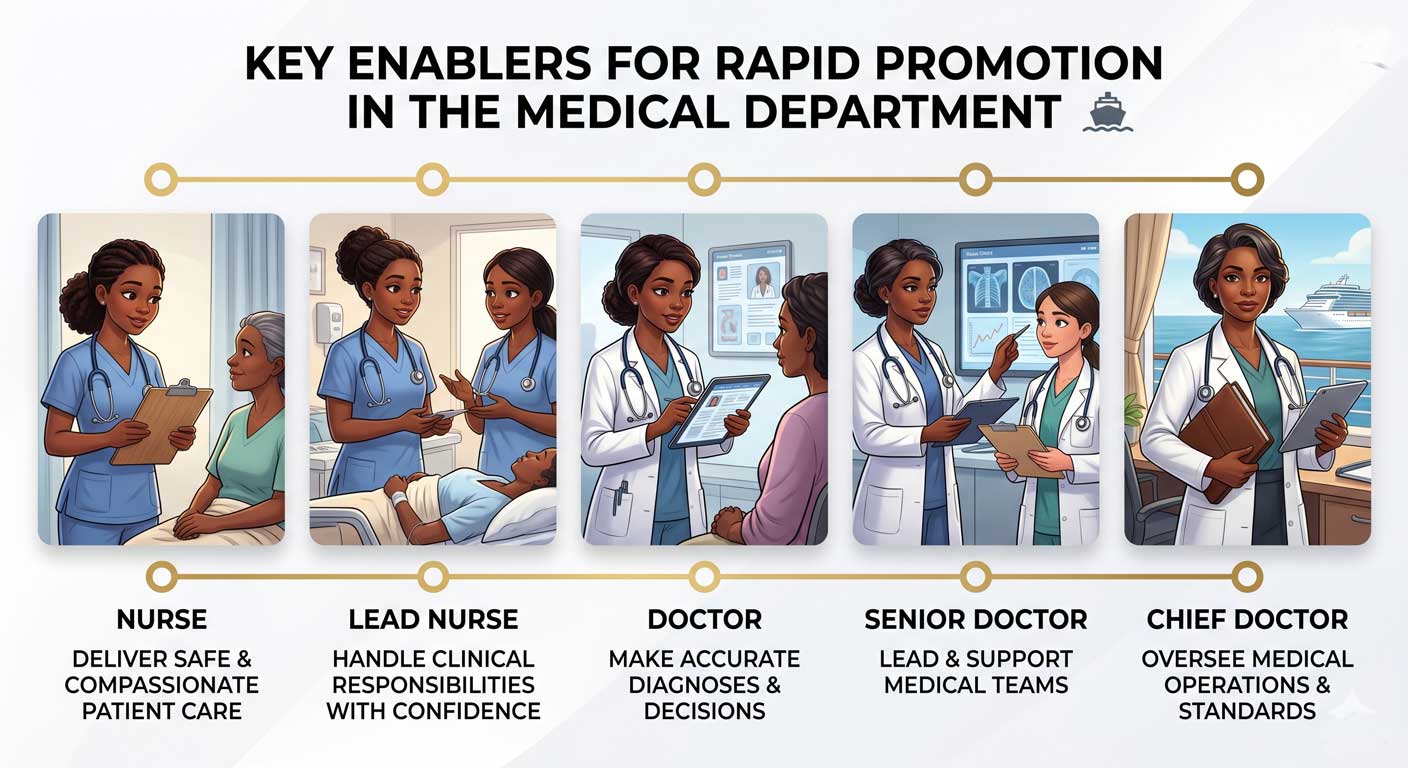
Promotion at this stage comes from proving total reliability in clinical audits, mastering the medical reporting software, and showing proactive management of the pharmacy and equipment maintenance.
What changes at this level?
Transitioning to Doctor requires the correct shore-side credentials. Onboard, it shifts your focus to primary diagnosis, surgical procedures, and acting as the final medical authority for guests and crew.
What unlocks the next jump?
Moving toward Senior Doctor requires visible leadership, expertise in outbreak prevention (VSP/USPH), and the ability to coordinate complex medevacs with shoreside authorities calmly.
What matters most at senior level?
Chief Doctors are responsible for the entire department's operational integrity. Success depends on strategic risk management, fleet-wide health policy, and the ability to maintain clinical excellence across multiple vessels.
Crew who show discipline, reliability, leadership potential, and the right attitude can sometimes progress faster than the standard timeline. Growth depends on performance, vacancies, strong references, and how consistently you deliver under pressure.

What Unlocks Medical Promotion?
Moving up in the medical department is about proving you can balance high-level clinical precision with maritime leadership and public health management.
Why clinical consistency matters
In maritime medicine, reliability is vital. Consistency means maintaining absolute accuracy in patient records, following strict dispensing protocols, and ensuring the clinic is always emergency-ready, even during quiet periods.
Why emergency leadership matters
Promotion follows those who can command a scene. Senior medical officers are trusted to guide the stretcher team, coordinate with the Bridge, and manage critical care situations without losing composure or technical focus.
Why public health matters
Shipboard medicine is heavily focused on prevention. Understanding global sanitization standards and leading your department to pass health audits with 100% compliance shows you are ready for senior management roles.
Why attitude matters
As a Medical Officer, your attitude reflects the department. Professionalism, a willingness to mentor junior staff, and the ability to work effectively with the Hotel and Deck departments build the trust required for promotion.
Medical crew who show strong discipline, reliable performance, leadership potential, and the right attitude can sometimes grow faster than the standard timeline.
Common Mistakes That Slow Medical Promotion
Growth onboard is not only about clinical skill. Many medical professionals stay in the same rank longer because of small habits that reduce trust, administrative consistency, and leadership confidence.
The medical crew who grow fastest are often the ones who remove these mistakes early, stay coachable, and build trust through strong daily performance, clinical discipline, and professionalism onboard.
How to Stand Out in Medical Services
The medical professionals who move up fastest are usually not just clinically skilled. They are dependable, coachable, disciplined, and trusted when pressure rises.
Why this stands out
Owning your clinic shows maturity and discipline. It means your setup is ready, your logs are sharp, your attention is strong, and your area stays under control even before someone asks. That kind of ownership builds trust quickly in a professional clinical environment.
Why this stands out
Pressure reveals professionalism. When the medical workload becomes intense, crew who stay calm, communicate clearly, and keep accuracy stable are often seen as stronger candidates for future growth and leadership.
Why this stands out
Medical staff who ask for feedback show coachability. They usually improve faster, correct mistakes earlier, and make it easier for senior doctors to invest time in them because they clearly want to grow.
Why this stands out
Reliability is one of the strongest promotion signals onboard. Being punctual, prepared, accurate, and dependable every shift shows that others can count on you when standards and patient care matter most.
When senior medical leaders know they can rely on you, your growth can accelerate. In many cruise ship medical centers, trust is built through standards, attitude, consistency, and the way you perform when pressure rises.
A Day in the Life of a Medical Officer
Explore how a typical day onboard flows for the medical team, from morning clinics to emergency readiness. Tap each stage to see what medical crew are usually doing throughout the day at sea.
The medical team prepares for the day.
Morning starts with checking emergency equipment, calibrating lab machines, and reviewing the night's on-call reports. The nursing team ensures the pharmacy is stocked and treatment rooms are sanitized and ready for patient arrival.





Ready to Start Your Cruise Ship Medical Journey?
If you are serious about building a professional healthcare career at sea, the next move is to take action. Explore open medical roles, apply for positions, or strengthen your clinical profile before submitting your application.
The medical professionals who move forward fastest are usually the ones who prepare properly, present themselves well, and apply with confidence and realistic expectations about life and work onboard.
Frequently Asked Questions About Cruise Ship Medical Careers
These are some of the most common questions professionals ask when considering a healthcare career and medical officer roles at sea.
How much do cruise ship medical officers earn?
How long does it take to become a Senior Doctor?
What helps medical staff get promoted onboard?
Do medical crew save more money than land-based staff?
Useful Pages for Future Medical Officers
If you want to move from interest to action, these pages will help you understand the maritime requirements, improve your application, and prepare properly for work onboard.