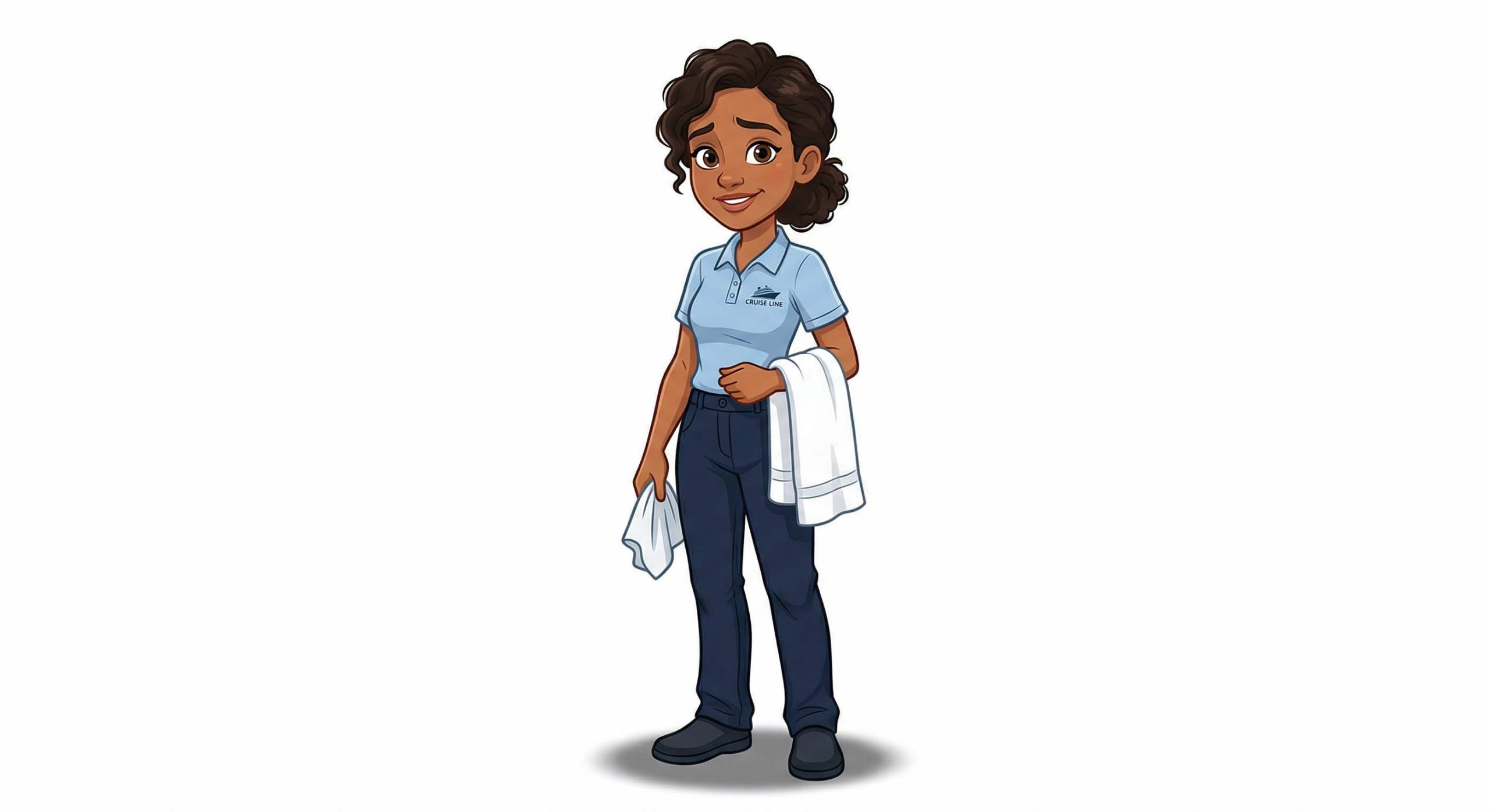
Housekeeping Jobs on Cruise Ships
Discover the onboard housekeeping department, from cabin steward and public-area roles to the standards, teamwork, guest service, and daily responsibilities that keep a cruise ship running smoothly.
Meet the Housekeeping Team at Sea
Drag the progress line or tap a stage to see how housekeeping responsibilities change from utility work and cabin support to supervision and department leadership.

Utility
Utility work builds the foundation: ship layout, public-area cleaning, sanitation routines, equipment care, and the discipline needed to work safely around guests.
Housekeeping Salary Guide by Responsibility
These monthly figures are broad examples only. Actual pay can vary by cruise line, vessel, contract terms, gratuities, seniority, nationality rules, and experience.

Why Onboard Housekeeping Pay Can Stretch Further
Many crew have fewer day-to-day living costs while onboard because accommodation and meals are commonly provided during the contract.
Where Housekeeping Experience Can Lead
Housekeeping experience can lead from support roles into cabin responsibility, supervision, and senior hotel leadership as skills, trust, and vacancies develop.
How Responsibility Can Grow Onboard
Progression depends on performance, experience, vacancies, company structure, references, and whether senior leaders trust you with more responsibility.
What helps you move up faster?
Moving into cabin support usually requires reliable attendance, good cleaning standards, safe equipment use, and evidence that you can work responsibly around guests.
What changes at this level?
At this level you are expected to organise your section, protect guest privacy, communicate clearly, report faults, and maintain standards without constant supervision.
What unlocks the next jump?
Supervisory readiness is shown through fair leadership, accurate inspections, calm communication, practical coaching, and consistent follow-through when standards are missed.
What matters most at senior level?
At senior level, operational control, people management, inventory discipline, reporting, and cross-department communication become as important as technical housekeeping knowledge.
Crew who show discipline, reliability, leadership potential, and the right attitude can sometimes progress faster than the standard timeline. Growth depends on performance, vacancies, strong references, and how consistently you deliver under pressure.

What Builds Trust in Housekeeping?
Length of service alone does not guarantee progression. Supervisors look for people who can be trusted with standards, guests, equipment, time, and other crew.
Why consistency matters
Consistency means arriving prepared, following the required cleaning process, completing the assigned section properly, and avoiding repeated missed details.
Why technical skill matters
Technical knowledge matters because the department relies on safe procedures, correct products, proper linen handling, efficient room turnover, and accurate reporting.
Why leadership matters
Future supervisors are noticed when they can guide others without creating conflict, solve practical problems, and keep the team focused when the workload increases.
Why attitude matters
Housekeeping crew work inside private guest spaces and around valuable belongings. Professionalism, discretion, maturity, and respect are essential at every level.
Crew who show strong discipline, reliable performance, leadership potential, and the right attitude can sometimes grow faster than the standard timeline.

Habits That Hold Housekeeping Crew Back
Small habits can weaken trust even when someone works hard. These are common behaviours that can make supervisors less confident about giving a crew member more responsibility.
The crew who grow fastest are often the ones who remove these mistakes early, stay coachable, and build trust through strong daily performance, discipline, and professionalism onboard.
How to Become a Trusted Housekeeping Crew Member
Crew stand out when they combine good cleaning standards with organisation, guest awareness, reliability, and calm teamwork. Speed matters, but it is only one part of the job.
Why this stands out
Taking ownership shows that you understand the full section, not just individual cleaning tasks. It includes supplies, presentation, reporting, timing, and the condition of shared spaces.
Why this stands out
Pressure shows how someone prioritises work. Calm decisions, early communication, and consistent quality are more valuable than rushing and creating rework.
Why this stands out
Crew who respond well to coaching become easier to develop because supervisors can see that corrections lead to better results.
Why this stands out
Reliability matters because housekeeping schedules affect cabins, guest expectations, inspections, and the work of other crew. People who can be counted on reduce pressure for the whole team.
When senior housekeepers know they can rely on you, your growth can perfectly accelerate. In many cruise ship hotel departments, trust is built through spotless standards, beautiful attitude, consistency, and the exact way you perform when embarkation pressure rises.
A Working Day in Cruise Ship Housekeeping
A housekeeping day can be split across several service periods. Use the timeline to see one example of how preparation, cabin work, checks, rest periods, evening service, and handover may fit together.
The day starts with preparation.
Crew may begin with a briefing, key-control procedures where applicable, trolley preparation, linen checks, supplies, and any notes about priority cabins or special requests.


Ready to Apply for a Housekeeping Role?
If your background fits hotel, room-attendant, cleaning, guest-service, or supervisory work, review the current vacancies and prepare your application carefully before submitting it.
The stewards who move forward fastest are usually the ones who prepare properly, present themselves well, and apply with confidence and realistic expectations about life and work onboard.
Common Questions About Cruise Ship Housekeeping Jobs
These questions cover practical points applicants often ask about housekeeping roles, progression, pay, and the work itself.
How much does a cruise ship steward earn?
How long does it take to become a Housekeeping Supervisor?
What helps housekeeping staff get promoted onboard?
Do cruise ship stewards save more money than land-based roles?
Useful Pages for Housekeeping Applicants
Use these pages to understand progression, general joining requirements, safety training, CV preparation, and interview expectations.